Furniture Board
Custom Furniture Materials Guide: MDF vs Plywood vs Solid Wood Hong Kong
Published: 2026-08-17 · Updated: 2026-08-17 · 6 min read
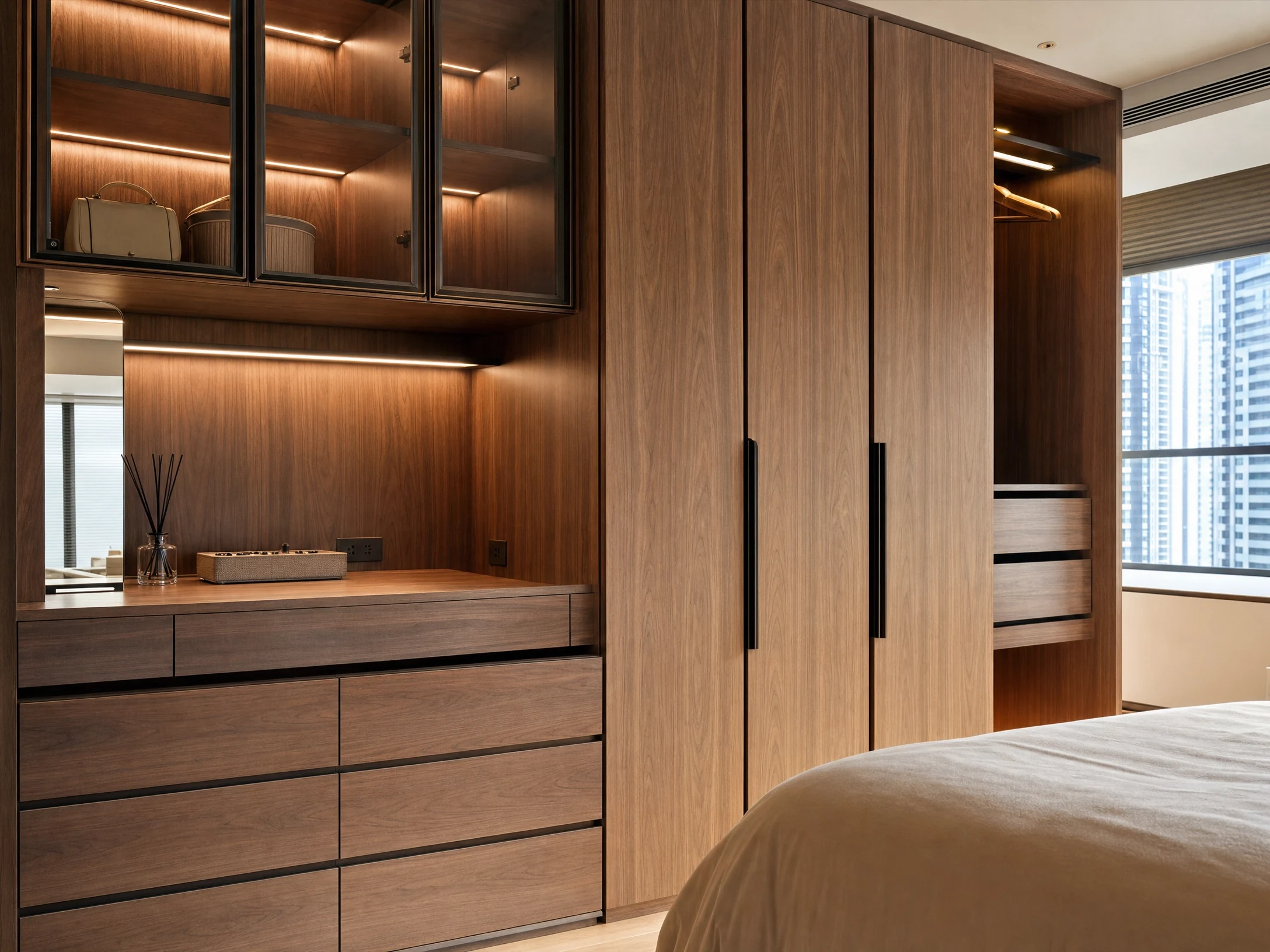
TL;DR
Which board for custom furniture? A clear guide to solid wood, plywood and fibreboard, plus formaldehyde grades (E1/E0/ENF) for your family's health. Use the practical checkpoints below to separate a low-risk next step from work that needs a qualified professional. Keep a written record of the scope, timing and any change agreed on site.
Material decision checklist
| Decision point | Compare | Confirm before order |
|---|---|---|
| Daily use | Moisture, heat and impact resistance | The exact product code and installation method |
| Health and maintenance | Cleaning needs, emissions information and lifecycle | Care instructions and replacement availability |
| Budget | Installed cost, not material price alone | Hardware, trims, delivery and remedial work |
Visual repair guide

For custom furniture, the board material most affects durability and health — yet the market is full of types and confusing jargon. According to the Environmental Protection Department's indoor air quality research, formaldehyde levels in newly renovated units average 2-5 times above the safety standard, with board materials being the largest source. This guide walks you from board types to formaldehyde grades so you can order with confidence.
1. Common board types explained
Common boards include solid wood, plywood, MDF (fibreboard) and particle board. Plywood is pressed from multiple thin layers — stable, durable and more moisture-resistant — a popular choice for custom cabinets. MDF is smooth and easy to shape but less water-tolerant; particle board is cheap but weaker in load-bearing and moisture resistance. There are also multi-layer solid wood boards (thicker than regular plywood) and melamine-faced boards (no painting needed).
| Board Type | Moisture Resistance | Load Bearing | Cost | Best For | Typical Grade |
|---|---|---|---|---|---|
| Solid Wood | ★★★★ | ★★★★★ | Highest | Premium furniture | Natural |
| Plywood | ★★★★ | ★★★★ | Med-High | Carcasses, kitchens | E0-E1 |
| MDF | ★★ | ★★★ | Medium | Door panels, profiles | E1-E0 |
| Particle Board | ★★ | ★★ | Low | Inner panels | E1-E2 |
| Melamine Board | ★★★ | ★★★ | Medium | Doors, shelves | E0-ENF |
2. Formaldehyde grades explained
Formaldehyde emission is key to indoor air quality. Common grades from high to low are E2, E1, E0, up to the stricter ENF (no added formaldehyde). Per ISO 12460, E1 allows ≤0.124mg/m³, E0 ≤0.050mg/m³, and ENF ≤0.025mg/m³. For homes — especially with children or elderly — choose at least E1, and E0 or ENF where possible.
Note that formaldehyde release is continuous: it peaks in the first 3-6 months after new furniture arrives, then gradually decreases but can persist for years. So don't assume 'airing out' solves everything — choosing low-formaldehyde boards at the source is the most fundamental solution.
3. Edge banding: the overlooked key
Edge banding is often overlooked but extremely important. Good edge banding prevents moisture from seeping through board edges causing swelling, reduces formaldehyde release from cut surfaces, and improves overall aesthetics. Common types include PVC, ABS and wood veneer edge banding. ABS is eco-friendly and durable, currently the better choice. Machine precision also matters — factory-grade edge banding far outperforms hand-applied banding.
4. Board selection by location
Kitchen and bathroom cabinets: must choose highly moisture-resistant boards like marine plywood or moisture-resistant particle board with quality edge banding. Wardrobes and storage: can use regular plywood or melamine board, but carcasses should be 18mm+ thick for load bearing. TV and display cabinets: can use MDF for profiled doors with plywood carcasses. Platform beds: must use high-strength plywood as they bear body weight plus mattress weight.
5. Hardware matters equally
Even the best boards won't last if hardware is poor. Choose branded hinges (e.g. Blum, Hettich) with soft-close to prevent slamming damage. Use three-section silent slides for better load capacity and smoothness. Use branded gas struts to avoid sagging after a few years. These small parts directly affect daily user experience.
6. How to identify board quality
A few simple methods: First, check the cut edge — plywood shows clear wood grain layers, particle board shows crushed wood chips. Second, smell — boards exceeding formaldehyde standards have a noticeable pungent odour. Third, check weight — same size plywood is heavier than particle board due to higher density. Fourth, ask for certificates — proper boards have formaldehyde test reports; be cautious if they can't provide one. OmniFix Decoration clearly states board brand, model and formaldehyde grade, and can provide test reports on request.
7. Summary: Don't shop on price alone
A cheaper board may mean one grade lower formaldehyde or weaker moisture resistance. Furniture lasts years — the small saving can cost you long-term air quality and durability. Especially for kitchen cabinets and wardrobes used daily, board quality directly affects your family's health. For safe, durable and beautiful custom furniture, contact OmniFix Decoration — we clearly explain the source and grade of every board. WhatsApp free consultation: 9290 2652.
Assessing Core Materials and Moisture Resistance in Hong Kong Carpentry When planning custom furniture or built-in carpentry in Hong Kong apartments, selecting the right furniture board is critical due to our subtropical climate's high humidity. Homeowners frequently face choices between blockboard, plywood, and moisture-resistant medium-density fiberboard. In local site conditions, solid plywood and E0-grade blockboard are generally favored for structural load-bearing components like wardrobe carcasses, loft bed frames, and wall-hung television units, as they hold screws firmly and resist warping significantly better than standard particle boards when indoor humidity fluctuates between seasons. During your initial contractor consultation, always request a physical sample of the core material rather than relying solely on surface laminate catalogues. Inspect the cross-section carefully to ensure uniform layers without internal voids, which compromise structural integrity and hardware grip over time. ### Navigating Quotation Details and Decision-Making Methodologies Effective decision-making during the design phase involves balancing aesthetic preferences with practical durability and maintenance realities in compact living spaces. When reviewing contractor quotations, ensure specifications are meticulously detailed rather than left ambiguous. Insist that the formal quotation or written communication records explicitly state the exact board grade, panel thickness—such as 18mm for main structural frames and 9mm for cabinet back panels—and edge-banding application methods. Vague descriptions often lead to misunderstandings or unauthorized substitutions during factory fabrication. Establishing clear milestones for design sign-off, factory production, and site delivery helps synchronize your overall renovation schedule and prevents costly delays with subsequent trades like painting, flooring, tiling, or electrical work. Furthermore, discussing hardware brand preferences, sliding tracks, soft-close mechanisms, and hinge qualities upfront prevents unexpected cost variations and future maintenance headaches. ### Practical Checklist for Site Delivery and Final Inspection When the finished furniture boards and cabinet modules arrive at your renovation site prior to final assembly, conduct a thorough joint inspection with your site foreman or project manager. Verify all delivery notes against your agreed specifications, checking dimensions, surface finishes, and hardware fittings. Pay special attention to edge sealing quality; unsealed or poorly glued edges in humid environments can absorb moisture, leading to premature swelling and structural deformation within months. Maintain written logs of all site coordination discussions, snagging lists, and agreed rectification measures. Clear communication records ensure accountability between the carpentry workshop and site installers, safeguarding your investment and ensuring a smooth, successful completion of your home renovation project. <!-- P2-CONTENT-EXPANSION -->
Official reference
Check the official EPD resource for Hong Kong environmental information relevant to material selection and disposal.
About the author
OmniFix Custom Furniture Team
Frequently asked questions
Is ENF-grade always best?
ENF is the no-added-formaldehyde grade with the lowest emissions and best for health, but costs more. If budget is limited, E0 is already an excellent choice with very low formaldehyde release.
What's the difference between moisture-resistant and regular boards?
Moisture-resistant boards have moisture-repellent additives during production, better resisting humid environments, especially suitable for kitchens and bathrooms. But moisture-resistant doesn't mean waterproof — prolonged water exposure still causes damage.
How to confirm the factory uses the board stated in the quote?
Request purchase orders and formaldehyde test reports from the factory, and inspect board cuts and markings during installation. OmniFix states board brand and model in the quote and welcomes on-site inspection by homeowners.