Aircon Maintenance Contracts: Residential vs. Commercial Plans
Aircon Maintenance Contracts: Residential vs. Commercial Plans
Published: 2026-08-15 · Updated: 2026-08-15 · 8 min read
TL;DR
Are aircon maintenance contracts worth it? Compare residential and commercial plans, cleaning frequencies, and repair coverage. Contact our experts today. Use the practical checkpoints below to separate a low-risk next step from work that needs a qualified professional. Keep a written record of the scope, timing and any change agreed on site.
Planning decision checklist
| Stage | Action today | Confirm before proceeding |
|---|---|---|
| Scope | Write down the outcome you need | What is included, excluded and contingent |
| Time | Set a realistic milestone sequence | Access, approvals and disruption constraints |
| Cost | Compare like-for-like quotations | Payment stage, variation process and warranty |
Visual repair guide
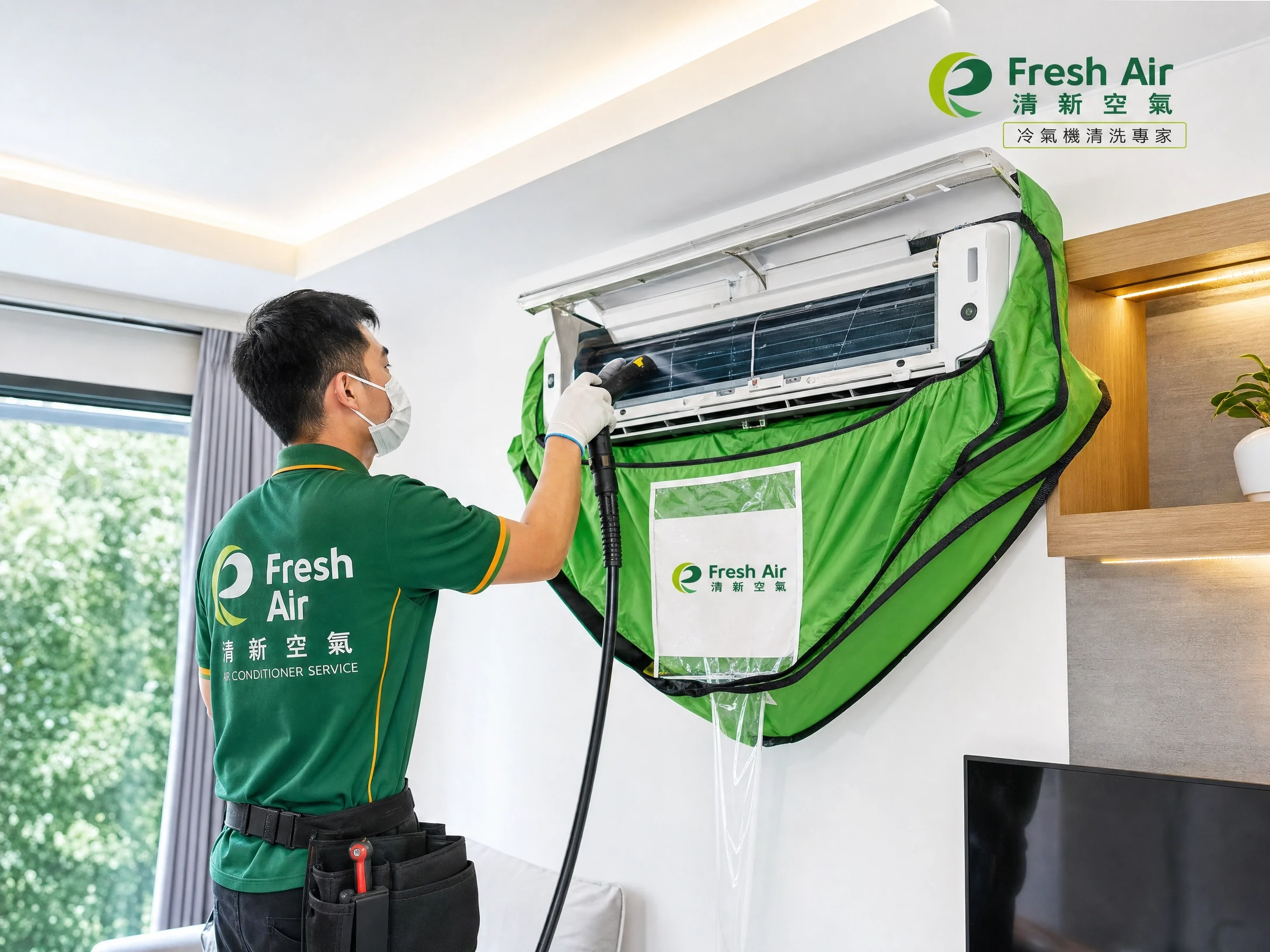
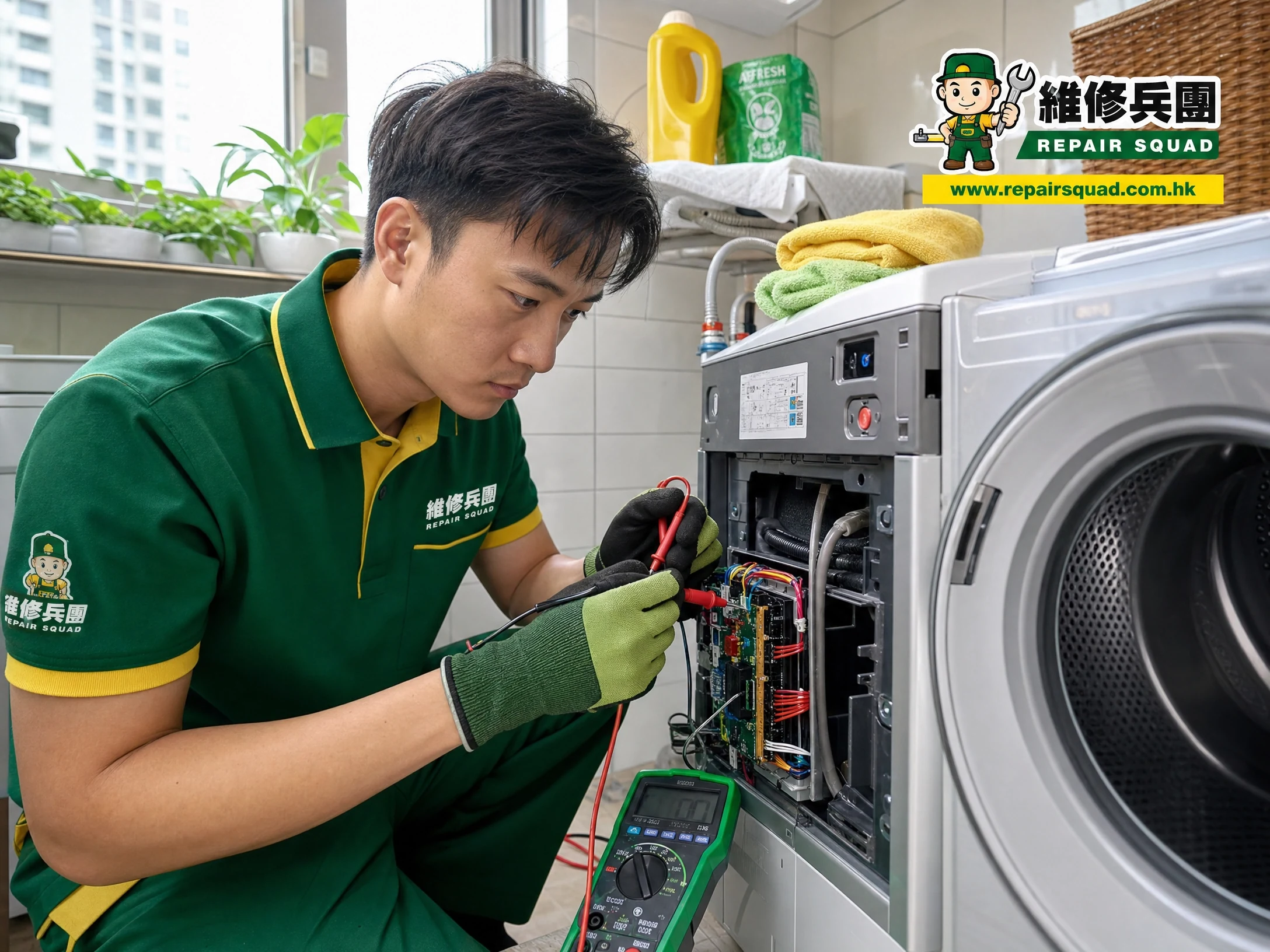
Deciding whether an aircon maintenance contract is worth signing primarily depends on property type, daily usage frequency, operational intensity, and overall user tolerance for unexpected operational downtime across all seasons of the year. The fundamental safety boundary dictates that any specialized work involving refrigerant leaks, electrical wiring modifications, or high-altitude exterior work must be strictly handled by qualified registered technicians rather than attempted independently by building occupants or untrained personnel. This comprehensive reference guide provides an in-depth analysis of maintenance contract values, residential versus commercial service differences, and essential strategic considerations before formalizing any service agreements across diverse Hong Kong properties and commercial establishments.
Are Aircon Maintenance Contracts Worth It? Criteria for Residential and Commercial Users
Under Hong Kong's notoriously hot and humid subtropical climate, air conditioning systems operate intensively throughout most of the year, significantly accelerating mechanical wear and tear across all internal components, electronic circuit boards, and ventilation pathways. Many property owners frequently question whether it is more economical to pay per service call or invest in an annual aircon maintenance contract. For residential users with only two to three window units or split-type air conditioners, prepaying annual service fees may not offer the optimal financial value since individual failure rates are generally lower and manageable through periodic single service visits.
Conversely, commercial establishments, retail shops, and corporate offices face extremely demanding operational environments where sudden cooling system failures directly impact business continuity, employee productivity, and customer satisfaction. For these commercial entities, priority on-call support, guaranteed response times, and scheduled preventive inspections included in an aircon maintenance contract are indispensable operational safeguards. The core strategic advantage of such agreements lies in transforming unpredictable repair risks and emergency cash outflows into fixed, highly predictable annual budgetary expenses that protect enterprise profitability.
Furthermore, commercial facilities often operate under stringent municipal and building management regulations that mandate certified maintenance records for central ventilation systems. Having a formal service contract ensures full compliance with statutory requirements, mitigates legal liabilities associated with equipment malfunctions, and provides comprehensive documentation for insurance and audit purposes. Property managers must carefully evaluate these regulatory dimensions when determining annual maintenance allocations and negotiating service agreements with certified engineering vendors.
These professional contracts typically encompass a fixed number of scheduled chemical aircon cleaning sessions, comprehensive motor inspections, electrical voltage tests, and emergency troubleshooting visits annually. From a cost-efficiency perspective, while pay-per-service appears superficially economical during stable operating periods, non-contract clients frequently face multi-day waiting queues during peak summer breakdown surges. This substantial time cost and associated operational revenue loss clearly highlight why corporate users strongly prioritize comprehensive contract coverage.
What Are the Practical Differences Between Regular Aircon Cleaning and Annual Contracts?
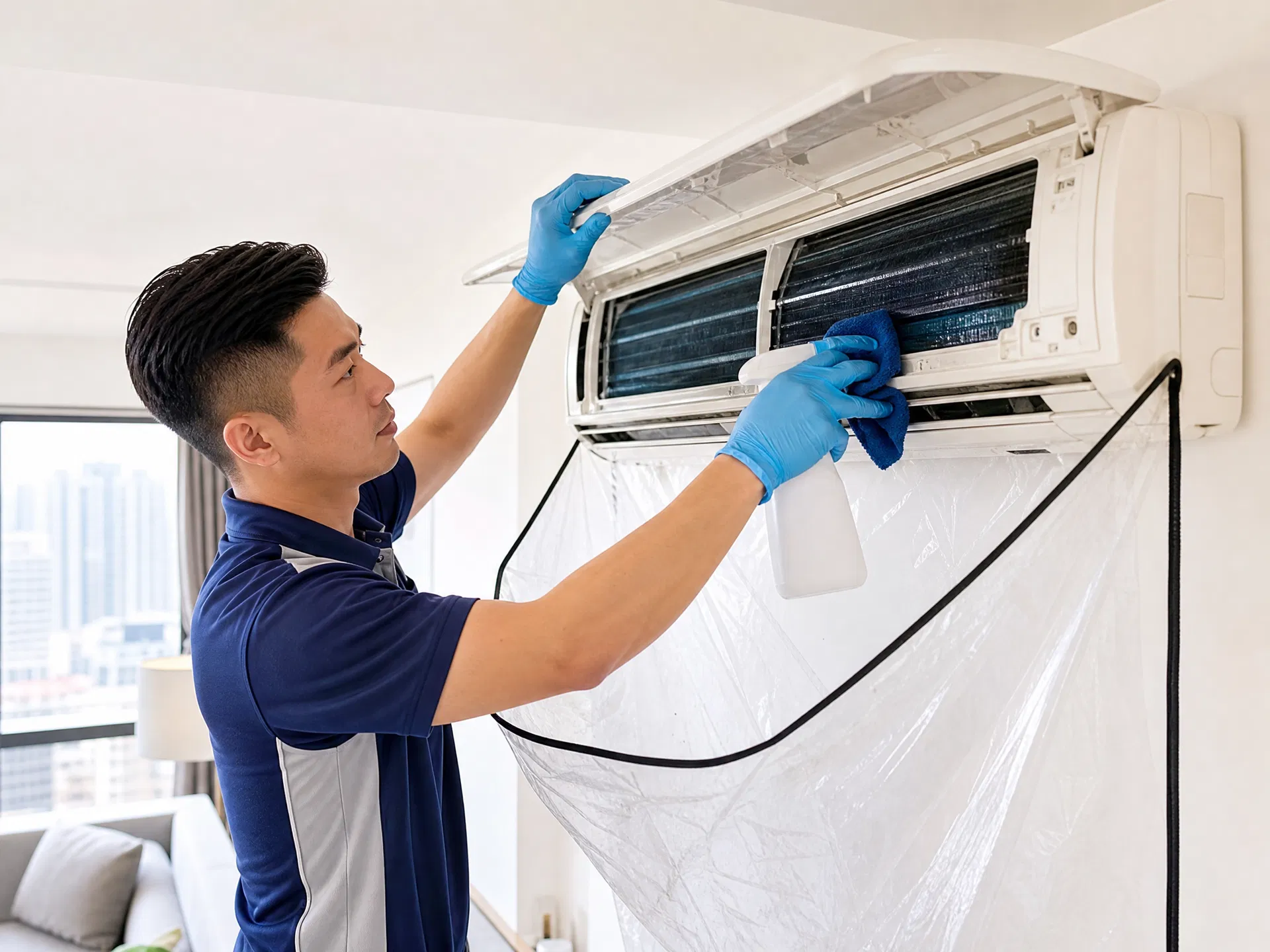
Many consumers easily confuse single-service cleanings with comprehensive annual contracts. Single-service visits typically focus only on surface cleaning of evaporators, washable filters, and external plastic casings, whereas full-service maintenance contracts incorporate long-term preventive maintenance, component testing, and mechanical diagnostics. Through professional aircon cleaning protocols, contract holders enjoy scheduled quarterly or semi-annual deep cleans, ensuring optimal energy efficiency and preventing power consumption spikes or cooling capacity drops caused by stubborn dust accumulation.
Official government guidelines and consumer advisories also strongly advise citizens to maintain electrical appliances regularly to ensure household and workplace safety [1]. Beyond superficial cleaning, maintenance contracts emphasize mechanical wear monitoring and early warning detection. During routine inspection visits, certified technicians utilize professional diagnostic instruments to measure operating electrical currents, check capacitor capacitance conditions, and test condensate drainage systems for potential blockages.
This proactive maintenance strategy effectively intercepts latent mechanical faults—such as bearing degradation, fan imbalance, or compressor overheating—resolving minor issues before major catastrophic failures occur and significantly extending overall equipment lifespan. Regular tracking of operating parameters also helps maintain manufacturer warranty compliance and prevents minor anomalies from escalating into costly emergency replacements or catastrophic system breakdowns.
How Do District-Specific Factors (Such as Kwun Tong Aircon Cleaning and Tai Koo Aircon Cleaning) Affect Contract Terms?
The architectural structures, building ages, and environmental characteristics of different urban districts across Hong Kong directly influence air conditioning maintenance needs and contractual terms. For instance, in industrial zones or older commercial building clusters characterized by heavy vehicular traffic and surrounding manufacturing or logistics activities, ambient air carries significantly higher concentrations of grease, particulate matter, and chemical pollutants.
Consequently, service agreements tailored for Kwun Tong aircon cleaning typically feature shortened cleaning intervals, specialized degreasing agents, and enhanced decontamination of aluminum condenser coils and air filters. These regional contracts are specifically calibrated for enclosed spaces, industrial workshops, or high-load operating environments to ensure sustained mechanical stability and cooling efficiency under demanding operating conditions.
Conversely, in dense residential estates and modern commercial hubs such as regions requiring tai koo aircon cleaning, contract terms place greater emphasis on central air conditioning terminal equipment, fan coil unit (FCU) maintenance, acoustic insulation, and indoor noise control. Deed of mutual covenant regulations, building power load limitations, and complex central drainage arrangements across different properties all dictate service schedules and operational boundaries.
Property owners and facility managers must therefore carefully review contract terms against specific building management requirements, height restrictions, and ventilation guidelines before formalizing any long-term service agreements.
How Do Commercial Air Conditioning Engineering and Residential Contracts Compare in Scope and Response Time?
Commercial and residential environments exhibit vast differences in air conditioning system scale, structural complexity, and service demands. General residential contracts primarily service inverter split-type units or standard window units, focusing on basic surface cleaning, remote control calibration, and simple condensate drainage inspections. In contrast, large-scale commercial air conditioning engineering involves multi-split VRV systems, central water-cooled chillers, large air handling units (AHUs), and complex automatic control loops.
Such sophisticated commercial installations require highly specialized engineering teams equipped with advanced diagnostic tools to perform periodic preventive maintenance, refrigerant balance calibration, and electrical safety testing. Regarding service level agreements (SLAs), commercial contracts feature exceptionally rigorous operational terms and legally binding response windows.
If an air conditioning system fails within a restaurant, retail shop, corporate office, or healthcare facility, commercial contracts usually guarantee emergency technician dispatch within a few hours to minimize operational disruption and financial losses. Residential contract response times, by contrast, are relatively more flexible and scheduled based on standard appointment queues. This disparity in service tiers is directly reflected in contract pricing structures and round-the-clock support commitments.
What Are the DIY Safety Boundaries and Hidden Contract Clauses to Watch Out For?
When evaluating maintenance service agreements, occupants and business operators must clearly understand the safety boundaries between simple self-maintenance and outsourced contractual scopes. In daily routines, users may clean accessible filters or wipe exterior casings independently, but they must never attempt to dismantle internal circuit boards, touch high-pressure refrigerant lines, or lean out of windows to clean outdoor condensing units.
According to Electrical and Mechanical Services Department safety guidelines, all operations involving electrical modifications, wiring repairs, and flammable refrigerant charging must be executed strictly by qualified registered professionals [2]. Attempting unauthorized interventions creates severe risks of electric shock, refrigerant burns, and structural falling hazards.
Furthermore, reviewing maintenance contract clauses requires careful attention to hidden restrictions and exclusionary terms. Key items to inspect include whether parts replacement incurs extra material fees, labor cost exemptions, surcharges for after-hours emergency repairs, and contract termination conditions. Some low-cost introductory contracts may include only a limited number of basic inspections while explicitly excluding consumable electrical parts and specialized chemical treatments.
Consumers and business managers should always request clear, itemized written specifications from service providers before signing to safeguard their operational rights, prevent future billing disputes, and ensure comprehensive protection.
Below is a detailed comparison table outlining the key differences between residential per-incident repair, residential annual maintenance contracts, and commercial air conditioning engineering contracts:
| Comparison Item | Residential Per-Incident Repair | Residential Annual Maintenance Contract | Commercial Air Conditioning Engineering Contract |
|---|---|---|---|
| Service Frequency | Booked per actual requirement | Fixed quarterly or semi-annual inspection | Intensive monthly or quarterly maintenance |
| Emergency Response | Queued, no priority | Priority booking rights | Express emergency on-site dispatch |
| Target Audience | Few split or window units | Medium-large residential and village houses | Restaurants, commercial buildings, offices |
| Cost Budget | Dispersed pay-per-use | Fixed annual contract expense | Essential enterprise operational budget |
Below is a structured step-by-step checklist for daily household air conditioning inspection and maintenance:
1. Regular filter and casing cleaning: Households can clean indoor unit filters bi-weekly using mild soap and water to prevent airflow obstruction and maintain cooling efficiency.
2. Check drainage pipe for backflow: Periodically inspect condensate drain pipes for blockages, slime buildup, or backflows to maintain smooth water discharge.
3. Monitor operating abnormal sounds and odors: Promptly record metallic friction sounds, rattling, or musty mildew odors and contact professional technicians for diagnostic evaluation.
4. Schedule professional chemical cleaning: Arrange professional air conditioner cleaning services annually based on usage intensity to thoroughly remove internal bacteria and mold.
5. Evaluate contract cost-effectiveness: Consider total unit count, equipment age, and failure risk statistics to decide whether an aircon maintenance contract is financially justified.
Which service guide is most relevant to the next step?
Use the following service guides to understand the scope that best matches the issue before deciding whether an inspection or quotation is appropriate:
- aircon maintenance contract hong kong: a focused guide to the scope, safety considerations and contact route for this type of issue.
- aircon cleaning hong kong: a focused guide to the scope, safety considerations and contact route for this type of issue.
- aircon cleaning kwun tong: a focused guide to the scope, safety considerations and contact route for this type of issue.
- tai koo aircon cleaning: a focused guide to the scope, safety considerations and contact route for this type of issue.
- aircon installation hong kong: a focused guide to the scope, safety considerations and contact route for this type of issue.
Official reference
Use the Housing Authority’s official guidance as a starting point when a housing, move-in or renovation decision affects a Hong Kong home.
About the author
FixNow Home Repair Editorial Team
Frequently asked questions
Is it necessary to sign an annual maintenance contract for residential air conditioning units with low usage?
If a residential unit has few aircon units and low usage frequency, prepaying annual maintenance fees may not be the most cost-effective approach. Generally, users can maintain performance by regularly cleaning filters themselves and booking single annual inspections. However, if household members have high indoor air quality requirements or complex concealed split systems, a maintenance contract provides reassuring routine inspection coverage.
What core service items are typically included in commercial aircon maintenance contracts?
Commercial contracts typically include scheduled chemical cleaning, motor and electrical system testing, drainage system clearing, compressor oil and refrigerant pressure checks, and priority emergency on-site service. The specific scope adjusts according to the commercial scale, such as VRV multi-split systems or large air handling units.
After signing a contract, can one enjoy same-day on-site repair in case of sudden aircon failure?
Contract holders generally enjoy higher service priority during peak summer periods, with most contracts committing technician dispatch within specified timeframes (e.g., within 24 hours). However, repair completion depends on the fault cause and replacement parts availability, and same-day completion cannot be strictly guaranteed.
Can ordinary households complete deep aircon maintenance through DIY methods?
Households can only perform basic DIY maintenance, such as washing filters or wiping casings. Any operations involving dismantling internal circuits, cleaning internal evaporators and blower wheels, or charging refrigerant carry electrical and chemical burn risks and must be handled by qualified technicians.
What are the common hidden restrictions or additional charges in maintenance contract terms?
Common restrictions include extra charges for consumable parts (such as capacitors or remote controls), additional scaffolding or safety harness surcharges for high-altitude work, and overtime fees for after-hours emergency repairs. Consumers should request clear listings of all potential surcharges before signing.
How to determine whether to renew maintenance contracts or directly replace existing aging air conditioners?
If an air conditioner has been in use for over 8 to 10 years and frequently suffers from compressor failures, refrigerant leaks, or major energy efficiency drops, repair costs may exceed the value of replacement. In such cases, consult professional technicians; if repair cost-effectiveness is too low, replacement with a new inverter energy-saving unit is recommended.