AC Maintenance
Air Conditioner Maintenance Tips: Save Energy & Extend Lifespan in Hong Kong
Published: 2026-04-05 · Updated: 2026-07-12 · 6 min read
TL;DR
How often should you service your AC? DIY filter cleaning tutorial, professional deep cleaning process, and cost comparison — extend AC lifespan and save on electricity. Use the practical checkpoints below to separate a low-risk next step from work that needs a qualified professional. Keep a written record of the scope, timing and any change agreed on site.
Quick decision checklist
| Situation | Safe first action | Before you book |
|---|---|---|
| Active leak, heat, burning smell or repeated tripping | Isolate the affected area only when safe | Describe the symptom, location and urgency in writing |
| Routine maintenance | Record model, age and last service | Confirm scope, consumables and warranty |
| Uncertain cause | Photograph the symptom and avoid repeated DIY attempts | Ask for diagnosis before approving replacement work |
Visual repair guide
Hong Kong's summer lasts half the year, making air conditioning essential for virtually every household. Yet many people only know how to use their AC, not maintain it — resulting in declining cooling, rising electricity bills, and even unpleasant odours affecting health. The Electrical and Mechanical Services Department recommends professional cleaning at least once annually, with filter cleaning every two weeks. Regular maintenance can extend AC lifespan by 3-5 years and save 15%-20% on electricity costs.
Why Does Your AC Need Regular Cleaning?
During operation, air conditioners continuously draw in indoor air. Dust, hair, bacteria, and mould gradually accumulate on filters, evaporator coils, and blower fans. When these components are covered in grime, the results include: reduced cooling efficiency (more electricity for the same temperature), decreased airflow, odour production (musty/sour smells), bacterial and mould growth (affecting respiratory health), and increased compressor load (shortened lifespan). According to the Energy Efficiency Office, an uncleaned AC uses 15%-30% more electricity than a cleaned unit of the same model.
DIY Filter Cleaning Tutorial
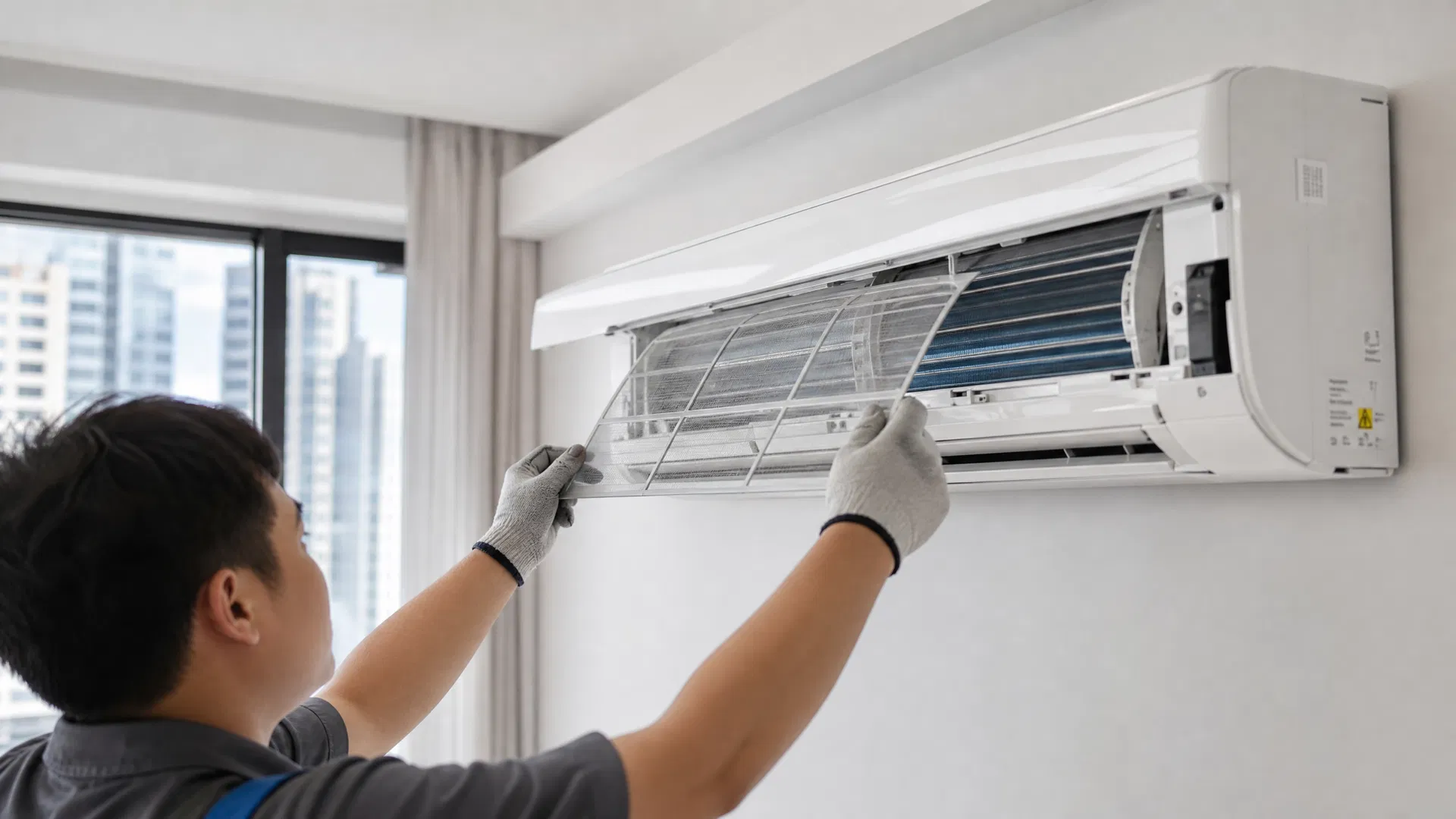
Filters are the easiest component to clean yourself — recommended every two weeks. Steps: First, turn off the AC power. Second, open the front panel and remove filters (usually push up then pull out). Third, rinse from inside to outside with a shower head or tap (never use hot water — it warps the mesh). Fourth, for stubborn stains, gently scrub with neutral detergent. Fifth, air dry in a shaded area (never sun-dry). Sixth, reinstall filters and confirm they're securely clipped. The whole process takes about 10-15 minutes but delivers immediate improvement in airflow and cooling.
What Does Professional Deep Cleaning Include?
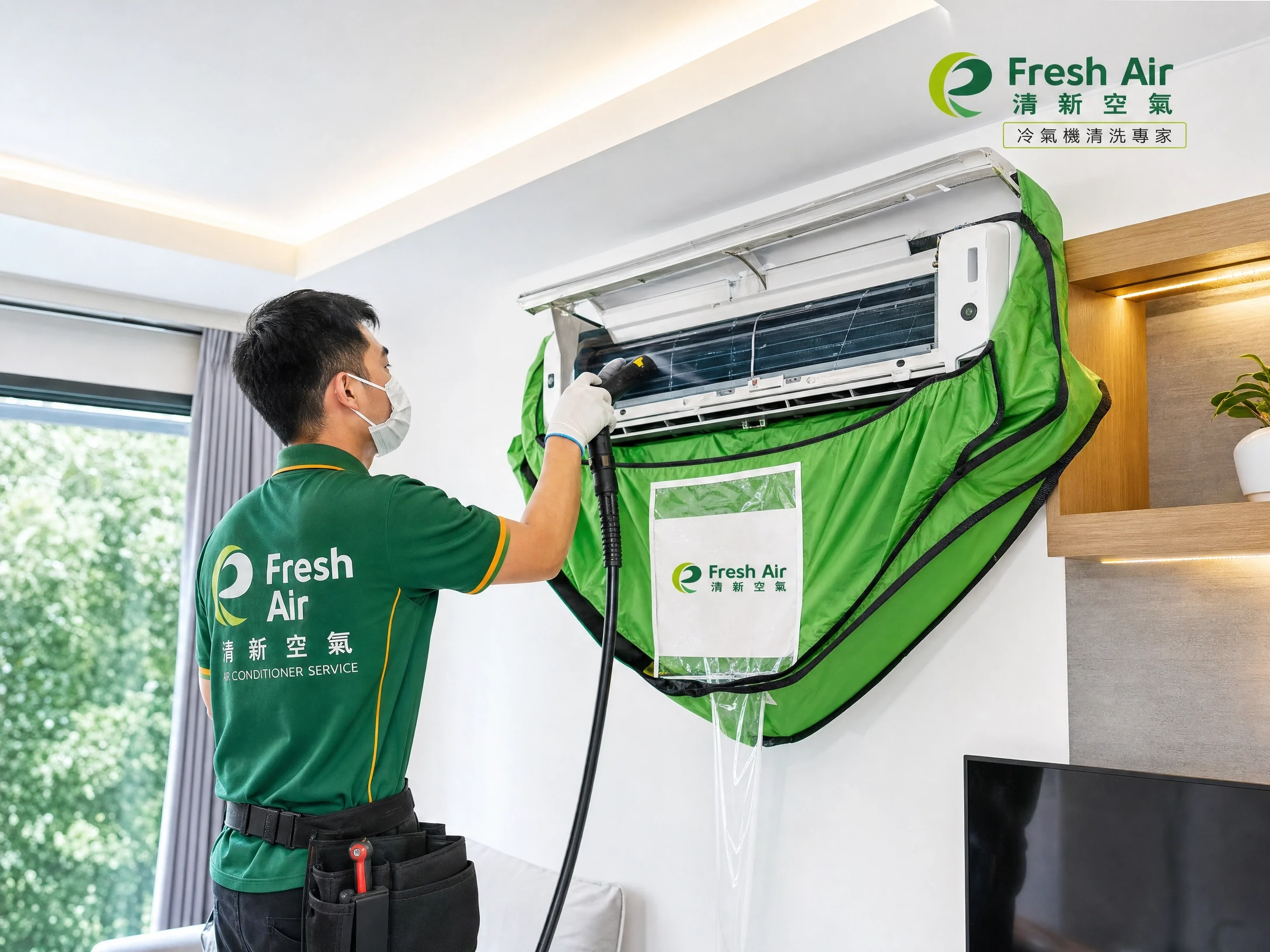
Professional AC cleaning differs fundamentally from DIY filter washing. Deep cleaning typically includes: removing the casing and louvers, high-pressure water cleaning of evaporator coils (removing deep-seated grime), cleaning the blower fan (rotating fan blades), cleaning the drain pan and pipe (preventing blockage and leaks), disinfection treatment, checking refrigerant pressure and electrical connections, and function testing. The process takes 45-90 minutes depending on model and grime level.
| Cleaning Type | Recommended Frequency | Cost Reference | Suitable For |
|---|---|---|---|
| DIY Filter | Every 2 weeks | Free | Daily maintenance |
| Basic Clean | Every 6 months | $280-$450 | General households |
| Deep Clean | Annually | $450-$800 | Heavy use/odour |
| Chemical Clean | Every 2-3 years | $600-$1,200 | Severe buildup/efficiency loss |
| Full Disassembly | Every 3-5 years | $800-$1,500 | Extremely dirty/older units |
Window vs Split AC: Maintenance Differences
Window units have simpler construction with indoor and outdoor components in one housing. When cleaning, pay attention to the outdoor condenser (dust buildup severely affects heat dissipation). Split units separate into indoor and outdoor units — the indoor unit is easier to clean, but the outdoor unit's typically elevated position means professional handling is recommended. Additionally, split unit copper pipe connections should be regularly checked for refrigerant leaks.
Common AC Problems: Self-Diagnosis
Common issues and likely causes: **Not cold enough** — blocked filter, low refrigerant, or room size exceeds AC capacity. **Dripping water** — blocked drain pipe, incorrect installation angle, or degraded insulation foam. **Bad smell** — mouldy evaporator, stagnant drain pan water, or dead pests. **Loud noise** — unbalanced blower due to dust, aging compressor, or loose mounting bracket. **Won't turn on** — dead remote batteries, power socket issue, or blown fuse.
When Should You Replace Your AC?
Average AC lifespan is 8-12 years. Consider replacement when: repair costs exceed one-third of a new unit's price, cooling noticeably declines despite cleaning, noise keeps increasing, the unit uses old R22 refrigerant (discontinued, expensive to top up), or the energy label is Grade 3 or below (a new Grade 1 unit saves 30%-40% electricity). When replacing, choose an inverter model — higher initial cost but significant long-term electricity savings.
Energy-Saving Tips
Beyond regular cleaning, these habits save electricity: set temperature to 25-26°C (each 1°C lower uses ~6% more power), use fans together (reduces perceived temperature by 2-3°C), turn off when leaving for more than 30 minutes, clean filters regularly, ensure windows and doors are closed (prevent cold air escape), and use the timer function (set to turn off 2-3 hours after sleeping). CLP estimates a four-person family's monthly AC bill at $400-$800 — adopting these habits can save 20%-30%.
FixNow Professional AC Cleaning Service
FixNow provides territory-wide on-site AC cleaning by experienced technicians using professional equipment and eco-friendly cleaning agents. Services include: free on-site quotation, full deep cleaning, disinfection, function testing, and a 30-day warranty period. Booking is quick and convenient with same-day service available. If your AC hasn't been cleaned in a long time, has developed odours, or shows declining cooling performance, WhatsApp 9290 2652 to book professional cleaning.
Pre-Summer Aircon Health Check and Inspection Checklist Before Hong Kong's humid summer sets in, carrying out a structured inspection of your air conditioning units prevents sudden breakdowns during peak heatwaves. Start by examining the wall-mounted unit and the outdoor compressor for unusual vibrations or rattling noises when powered on. Verify that the drainage pipe outside is completely clear, as blocked drainage is the primary cause of indoor water leakage—a common dispute between tenants and landlords in local apartments. Inspect the power socket and plug for any signs of discoloration or heat damage, ensuring the dedicated switchboard circuit is not overloaded. - Clean or wash the primary nylon filters every two to four weeks during heavy usage seasons. - Check the louver swing motor operation to ensure proper airflow distribution across the room. - Record any recurring musty odours, which often indicate mold buildup inside the evaporator coils. ### Managing Maintenance Contractors and Quotation Verification When hiring a licensed technician for chemical washing or major repairs in Hong Kong, clear communication and transparent quotation practices save time and money. Always request an itemized quotation upfront that explicitly specifies whether refrigerant top-up, chemical wash, or spare parts replacement (such as capacitors or fan motors) are included in the base fee. Confirm parking fees or remote village surcharges beforehand, especially if your residential estate has strict contractor registration protocols or restricted access roads. Keep a detailed log of service dates, warranty periods provided by the contractor, and photographic evidence of the unit's condition before and after maintenance. If you live in a managed building, coordinate with the management office regarding lift padding and designated service hours to avoid unnecessary fines or delays. ### Common Troubleshooting and Preventive Mistakes to Avoid Homeowners often make avoidable mistakes when handling minor aircon issues, leading to shortened equipment lifespan or higher electricity bills. Avoid setting the thermostat below 22°C immediately upon turning on the unit; this does not cool the room faster but places excessive strain on the compressor. Never ignore dripping sounds or minor moisture pooling around the indoor chassis, as ignoring early signs of blockage often results in ceiling damage or water seeping into electrical wiring. Ensure proper ventilation by occasionally opening windows even with air conditioning running, preventing stale indoor air buildup. Finally, schedule professional servicing at least once a year, preferably in early spring before technicians become fully booked for the peak summer rush. <!-- P2-CONTENT-EXPANSION -->
Official reference
For Hong Kong electrical, gas and mechanical-safety guidance, consult the official EMSD resource before making a safety-critical decision.
About the author
FixNow AC Maintenance Engineer
Frequently asked questions
How often does AC refrigerant need topping up?
Under normal conditions, AC refrigerant is in a sealed system and doesn't need regular topping up. If refrigerant is needed, it usually indicates a leak — find and fix the leak first, then recharge. Typical recharging cost is $400-$800.
Can AC cleaning damage the unit?
Professional cleaning won't damage the unit. However, DIY high-pressure washing of the evaporator can bend fins and affect performance. Leave deep cleaning to professionals — just clean filters yourself regularly.
What's the difference between inverter and non-inverter AC?
Non-inverter AC only has on/off states — it stops when reaching set temperature and restarts when temperature rises, using more electricity. Inverter AC adjusts compressor speed, maintaining set temperature at low power without frequent on/off cycling, saving ~30%-40% electricity with more stable, comfortable temperatures.
Why is my AC dripping water?
The most common cause is a blocked drain pipe (dust or mould obstruction) preventing condensate from draining properly. Other causes include: incorrect installation angle (indoor unit should tilt slightly toward drain), degraded insulation foam (condensation on copper pipes), or a cracked drain pan.
What AC capacity do I need?
General recommendation: under 100 sqft use 3/4 HP, 100-150 sqft use 1 HP, 150-200 sqft use 1.5 HP, 200-300 sqft use 2 HP, over 300 sqft use 2.5 HP+. If the room faces west, is on the top floor, or has many heat-generating appliances, add 0.5-1 HP.