Trends
2026 Interior Design Trends Hong Kong: Colours, Materials & Styles
Published: 2026-08-17 · Updated: 2026-08-17 · 6 min read
TL;DR
What colours and materials are trending in 2026? A look at this year's interior trends — earthy tones, natural wood, cream style and sustainable materials — to find your fit. Use the practical checkpoints below to separate a low-risk next step from work that needs a qualified professional. Keep a written record of the scope, timing and any change agreed on site.
Material decision checklist
| Decision point | Compare | Confirm before order |
|---|---|---|
| Daily use | Moisture, heat and impact resistance | The exact product code and installation method |
| Health and maintenance | Cleaning needs, emissions information and lifecycle | Care instructions and replacement availability |
| Budget | Installed cost, not material price alone | Hardware, trims, delivery and remedial work |
Visual repair guide

Styles change yearly, but rather than chasing trends blindly, understand the logic behind them and pick what suits your life. According to the Houzz Global Home Trends Report, the most popular interior design styles in Asia for 2026 centre on 'natural comfort' and 'healthy living', reflecting a pursuit of quality of life. This guide covers the major directions in Hong Kong interior design for 2026, helping you figure out which style suits you.
1. Earthy tones and natural textures: The most timeless choice
Earthy palettes remain popular for being timeless, easy to match and warm. Here are the most popular earthy tones for 2026:
| Colour | Reference Code | Suitable Spaces | Pairing Suggestions |
|---|---|---|---|
| Off-white / Oatmeal | Dulux 10YY 72/021 | Whole home | Natural wood furniture, white skirting |
| Terracotta | Jotun 2587 | Feature wall | Rattan, cotton-linen soft furnishings |
| Olive green | Benjamin Moore HC-110 | Study, living room | Natural wood, copper hardware |
| Warm grey | Nippon N-1882P | Bedroom, corridor | Cream bedding, soft lighting |
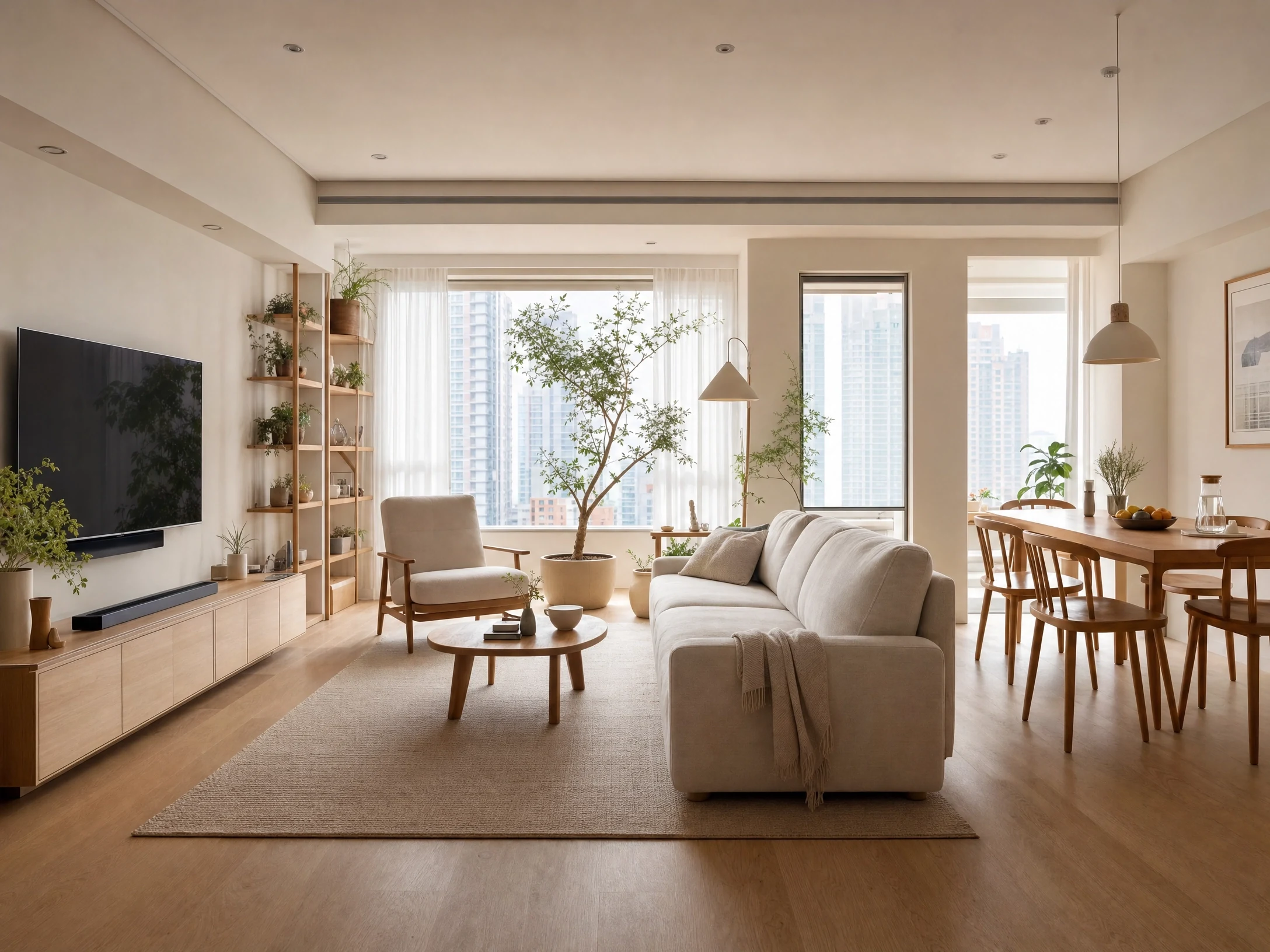
Paired with natural textures like wood, rattan and linen, they create a relaxing, healing home mood. The biggest advantage of earthy tones is timelessness — ten years later you'll still find them comfortable, unlike trendy colours that feel dated after a few years.
2. Cream Style: Soft premium feel
Cream Style centres on soft cream white with rounded lines and warm light for a soft, comfortable premium feel. This style is particularly suited to Hong Kong's small units, as light colours make spaces appear larger and brighter. Key elements include: unified cream-white tones throughout, rounded furniture (avoiding sharp lines), soft indirect lighting, and soft-textured fabrics and rugs.
Light luxury builds on the cream base by adding metallic elements (gold or copper hardware), marble patterns and refined details, bringing texture within simplicity. But avoid overusing metallic elements — otherwise it looks tacky. We recommend metallic elements comprise no more than 10-15% of overall decoration.
3. Sustainable and healthy materials: An inevitable trend
More owners care about eco-friendliness and health. Here are common healthy material choices:
| Material Type | Health Standard | Pros | Price Difference |
|---|---|---|---|
| Board | E0 grade (≤ 0.5mg/L) | Low formaldehyde emission | 10-20% more than standard |
| Board | ENF grade (≤ 0.025mg/L) | Ultra-low formaldehyde | 30-50% more than standard |
| Paint | Water-based | No VOC, no odour | 20-30% more than oil-based |
| Flooring | SPC stone-plastic | No formaldehyde, waterproof | Similar to solid wood |
| Wallpaper | Non-woven | Breathable, mould-resistant | 30-50% more than PVC |
A healthy home is no longer nice-to-have but increasingly a basic requirement. Especially for families with young children or chemical sensitivities, healthy materials should be the priority. OmniFix Decoration defaults to E0-grade or above boards and water-based paints, ensuring clients' residential health.
4. The evolution of Minimalism
Minimalism is no longer about 'having nothing' but 'everything having meaning'. 2026's minimalism emphasises 'Warm Minimalism' — retaining clean lines but adding warm textures and colours to avoid coldness. Specific approaches include: using natural wood instead of white lacquer, warm tones instead of pure white, and adding soft fabric elements.
5. Smart home integrated into design
Smart home is no longer novel, but 2026's trend is 'hiding' smart devices within the design rather than exposed wires and devices ruining aesthetics. Examples: embedded smart control panels (replacing traditional switches), hidden wireless charging (embedded in countertops or nightstands), automated curtains and lighting scenes. Plan smart device positions and wiring at the design stage to avoid retrofitting affecting aesthetics.
6. Trends are reference; fit matters most
Trends change, but you are the protagonist living there. When choosing a style, beyond looks, consider these practical questions: What are your living habits (cook often? work from home?), family structure (children? pets?), how much storage you need, and what maintenance level you can accept.
Our recommended principle: keep base elements (flooring, cabinetry, walls) in timeless neutral directions, and put trendy elements in easily replaceable soft furnishings (curtains, cushions, artwork, lighting). This way, even when trends change, you only need to swap soft furnishings to refresh the style without major works.
7. How OmniFix helps you choose your style
OmniFix Decoration weaves trending elements into a design that suits you — not blind accumulation. Our design process includes: first, understanding your lifestyle and preferences; second, providing 2-3 style options to choose from; third, using 3D renders to preview the result; fourth, adjusting based on your feedback until satisfied. For any style questions, WhatsApp free consultation: 9290 2652.
Navigating Color Palettes in Compact Hong Kong Apartments When designing or renovating interiors in Hong Kong, selecting the right color palette goes far beyond personal preference. Because local residential flats often feature limited square footage, low ceilings, and varying natural light exposure, color choices directly impact spatial perception and daily comfort. Opting for cohesive, light-reflecting neutral tones such as soft off-white, warm beige, or muted grey helps create an airy, expansive atmosphere in compact living rooms and bedrooms. However, completely avoiding dark or saturated tones can lead to a flat, uninspiring interior. Introduce accent colors through easily swappable soft furnishings, feature walls, or built-in cabinetry highlights rather than painting entire rooms in dark hues. Pay close attention to how your chosen paint interacts with LED lighting temperatures, as cool white bulbs can quickly turn a warm beige into an icy sterile shade. Always confirm color codes with your painting master before full-scale application begins on site. ### Selecting Durable Materials for High-Humidity Living Hong Kong experiences prolonged periods of high humidity and subtropical heat, which places immense stress on interior building materials. Solid wood flooring, while aesthetically pleasing, frequently warps, expands, or breeds mold if not treated or maintained with strict climate control. Instead, many homeowners turn to engineered wood, luxury vinyl tiles, or large-format porcelain tiles that mimic stone or wood textures while offering superior moisture resistance and ease of cleaning. For kitchen and bathroom cabinetry, moisture-resistant plywood cores combined with high-pressure laminate surfaces withstand steam and daily wear much better than standard particle board. When meeting with your contractor or interior designer, always request physical material samples to inspect under both direct daylight and warm interior lighting in your actual unit before final approval is signed off. ### Practical Checklist for Material and Tone Coordination Managing material and color selections effectively requires a structured, step-by-step approach to prevent costly redesigns mid-project. Use this practical framework during your procurement phase: - Test large paint sample patches directly on multiple walls rather than relying on small paper color cards to observe shadow casting. - Verify the slip resistance and scratch durability ratings of floor tiles, especially in high-traffic hallways and pet-friendly homes. - Check edge banding quality on laminated cabinetry to ensure moisture cannot seep into seams over time during humid summer months. - Standardize hardware finishes across hinges, handles, and bathroom fixtures to maintain visual harmony across compact living zones. <!-- P2-CONTENT-EXPANSION -->
Official reference
Check the official EPD resource for Hong Kong environmental information relevant to material selection and disposal.
About the author
OmniFix Design Team
Frequently asked questions
Will trendy styles date quickly?
Keep base elements (floors, cabinetry) in timeless neutrals, and put trendy elements in easily replaceable soft furnishings (curtains, cushions, artwork) — balancing fashion and longevity. When trends change, just swap soft furnishings to refresh the style.
Is Cream Style suitable for small units?
Very suitable. Cream Style uses light colours that make spaces appear visually larger and brighter. Combined with mirror elements and ample lighting, even a 300 sqft unit can feel comfortable and open.
Are healthy materials much more expensive?
Depends on the material type. E0-grade boards are about 10-20% more than standard, water-based paints about 20-30% more than oil-based. For a 400 sqft unit, using all healthy materials costs roughly $10,000-$20,000 extra, but buys a healthier living environment — especially worthwhile for families with young children.