Curtain and Drying Rack Installation Guide for Hong Kong Homes
Curtain and Drying Rack Installation Guide for Hong Kong Homes
Published: 2026-08-15 · Updated: 2026-08-15 · 8 min read
TL;DR
Expert guide on measuring, wall inspection, and hardware selection for curtain and drying rack installation in Hong Kong. Learn safe drilling practices and minor works. Contact us today. Use the practical checkpoints below to separate a low-risk next step from work that needs a qualified professional. Keep a written record of the scope, timing and any change agreed on site.
Planning decision checklist
| Stage | Action today | Confirm before proceeding |
|---|---|---|
| Scope | Write down the outcome you need | What is included, excluded and contingent |
| Time | Set a realistic milestone sequence | Access, approvals and disruption constraints |
| Cost | Compare like-for-like quotations | Payment stage, variation process and warranty |
Visual repair guide
Why Is Pre-Installation Wall and Structure Inspection Essential?
When undertaking curtain and clothes drying rack installation in Hong Kong residences, conducting a thorough pre-installation inspection of wall materials and structural integrity is vital to prevent hardware detachment or damage to concealed utilities. This article provides a comprehensive guide to measuring techniques, wall assessments, hardware selection, and safety boundaries to ensure secure setups.
Residential wall structures in Hong Kong vary widely, ranging from traditional reinforced concrete to solid brick and modern lightweight partitions, each offering distinct load-bearing capacities. Drilling blindly into walls without prior verification can easily lead to loose fasteners or, worse, puncture concealed electrical conduits or water pipes, leading to costly and disruptive repairs.
Therefore, carrying out a comprehensive initial inspection before commencing work is an indispensable step that no homeowner should ever skip. Residents should examine internal wall compositions and utilize professional detectors to map out electrical wiring accurately. For households lacking technical experience or when dealing with complex high-altitude tasks, engaging qualified Hong Kong Island repair or New Territories repair services guarantees optimal safety.
To ensure everything goes smoothly without unexpected issues, homeowners must cultivate strong safety awareness. Many residents underestimate the complexity of internal wall utilities and drill blindly based on mere visual estimation, which is often the primary cause of domestic water and electrical damages. Adopting a methodical inspection protocol is the hallmark of professional home maintenance.
Furthermore, understanding the load requirements of different fixtures helps prevent long-term structural fatigue. Walls that appear solid on the surface may hide internal cavities or aged plaster layers that require specialized reinforcement before any heavy hardware is mounted securely.
In addition to basic surface evaluations, checking for dampness or structural cracks around the proposed mounting area is critical. Excessive moisture compromises the expansion grip of wall anchors, potentially leading to sudden fixture detachment over time.
Property owners must also remain vigilant about building age and historical renovation changes. Older developments often feature modified internal layouts where original architectural drawings no longer reflect current wiring paths.
How to Accurately Measure Dimensions for Curtain Tracks and Drying Racks?
Precise measurement forms the core of a successful curtain installation and drying rack setup in any residential property. When measuring for curtains, allowances must be made beyond the window frame width to block light completely while calculating vertical clearance to the floor to ensure proper fabric drape.
For clothes drying racks, mounting heights must be tailored carefully to family members' heights, ensuring smooth operation without obstructing window openings or air conditioner drainage pipes. Improper placement compromises daily convenience, ergonomic utility, and overall household efficiency over the long term.
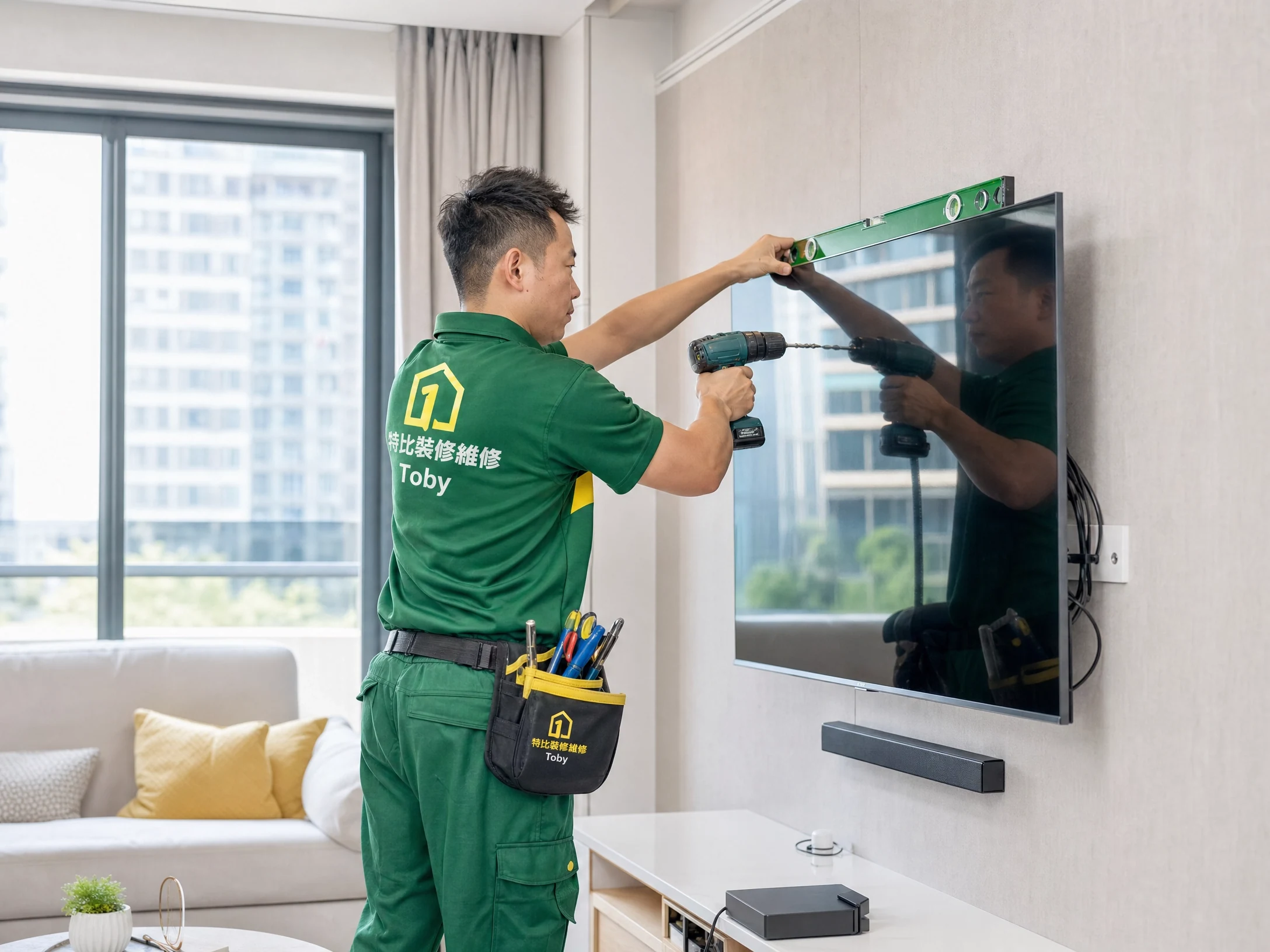
Utilizing a spirit level to establish a baseline during measurements is equally crucial. If curtain boxes or ceilings exhibit slight slopes, adjustments must be made during mounting to prevent a visually unbalanced finish or uneven load distribution that could weaken the mounting brackets over time.
Accurate dimension calculation not only enhances aesthetic appeal but also guarantees smooth operational performance over time. Whether dealing with manual pull cords or automated systems, precise spatial planning is necessary to support flawless mechanical operation and prevent premature wear and tear.
In addition to basic dimensions, installers must account for thermal expansion and seasonal humidity fluctuations in Hong Kong apartments. Materials like timber or composite structures may expand slightly, requiring small tolerance gaps during the initial measuring phase.
Taking accurate measurements also involves verifying diagonal dimensions to ensure rectangular frames and curtain tracks align perfectly with existing architectural lines, avoiding awkward gaps or misaligned hardware installations.
Proper alignment during the measuring phase prevents binding issues in mechanical pulley systems used for clothes drying racks, ensuring effortless operation every single day.
How to Avoid Concealed Utilities and Prevent Wall Cracking During Drilling?
The primary hazard during wall drilling is striking concealed electrical wiring or water supply lines embedded within the structure. According to official maintenance guidelines, residents should scan wall surfaces using metal and voltage detectors prior to drilling any holes.
Furthermore, drill bit selection and rotation speed control directly impact wall integrity. When drilling into tiled or hard concrete surfaces, operations should begin at low speeds and gradually increase pressure to prevent tile shattering or surrounding plaster spalling.
If metal resistance or suspected wiring paths are encountered mid-drilling, work must halt immediately for reassessment. For complex wall structures or households lacking specialized equipment, entrusting the task to experienced specialists is the safest course of action.
Proper safety precautions during drilling operations should never be overlooked. Wearing protective eyewear and dust masks effectively prevents flying debris from causing personal injury, while placing protective mats beneath the work area safeguards existing flooring against scratches and impact damage.
Maintaining a steady hand and vertical alignment while operating heavy power tools ensures that anchor holes remain clean and uniform, which directly contributes to the holding strength of the expansion plugs inserted afterward.
Adhering strictly to manufacturer torque specifications when tightening screws prevents over-compression of wall plugs, ensuring maximum friction grip within the drilled substrate.
Taking time to clear concrete dust from drilled holes using compressed air or a brush significantly improves the bonding effectiveness of chemical anchors or friction plugs.
What Are the Selection Standards for Different Wall Materials and Hardware?
Different wall materials require matching expansion anchors and fixing hardware to withstand long-term tensile stress and weight loads. The following comparison analysis table outlines common wall types and their suitable hardware for buyer reference:
| Wall Material | Suitable Hardware | Load Capacity | Construction Notes |
| Reinforced Concrete | Metal Sleeve Anchors | Very High (Ideal for Racks) | Requires hammer drill and masonry bits |
| Brick or Block Wall | Nylon Expansion Plugs | Moderate (Light Curtains) | Avoid excessive force to preserve hole integrity |
| Lightweight Partition | Hollow Wall Anchors | Low (Lightweight Items Only) | Secure into internal wooden studs if possible |
Selecting correct hardware not only extends fixture lifespan but also safeguards daily operational safety. For high-load installations like drying racks, inferior plastic plugs must be strictly avoided to prevent unexpected detachment accidents and structural failure.
When uncertain about suitable hardware for unique walls, consulting official maintenance guidelines or requesting professional shelf installation services prevents future complications and ensures every anchor point meets strict safety standards under all operating conditions.
Property owners must also consider environmental corrosion factors in humid coastal climates like Hong Kong. Utilizing stainless steel screws and rust-resistant brackets prevents unsightly oxidation stains and ensures long-term durability.
Evaluating the shear strength and tensile rating of each fastener ensures that dynamic loads from pulling wet laundry or opening heavy drapes do not compromise the integrity of the mounting assembly.
Matching anchor specifications carefully with manufacturer recommendations guarantees that the installed fixtures withstand maximum rated weight capacities without progressive loosening.
What Are the Standard Steps for Installing Curtains and Drying Racks?
Standard installation workflows require strict adherence to sequential planning to ensure every anchor point achieves maximum stability. Below is a systematic step-by-step checklist:
1. Tool Preparation: Gather power drills, spirit levels, stud detectors, pencils, and safety goggles.
2. Positioning and Marking: Accurately mark drilling spots on walls or ceilings based on measurements.
3. Wall Scanning: Use a detector to verify that drilling points are free from concealed utility lines.
4. Drilling and Anchoring: Drill to specified depth, clear debris, and insert appropriate expansion plugs.
5. Bracket Mounting and Alignment: Secure brackets, verify levelness, and tighten all fixings.
Each step is interlinked, and any oversight can compromise structural stability. Residents must execute each phase with patience and precision, avoiding shortcuts that bypass crucial safety checks and professional verification protocols.
Following systematic procedures ensures that the final assembly can endure repetitive daily stress, such as pulling heavy draperies or hanging wet laundry, without loosening over months of active usage.
Documenting the process and inspecting fixtures periodically after installation further guarantees ongoing safety and operational reliability throughout the lifespan of the equipment.
Executing each installation phase methodically prevents costly rework and guarantees that both aesthetic and structural expectations are fully satisfied upon completion.
When Should Installation Projects Be Handled by Professional Technicians?
While simple household fixture fittings can be accomplished via DIY methods, tasks involving high-altitude work, complex ceiling structures, or load-bearing wall modifications strongly warrant professional support and specialized engineering expertise.
Improper self-installation can result in property damage or unexpected detachment during subsequent use. Entrusting projects to experienced teams ensures absolute peace of mind and structural reliability across all residential settings.
Through regulated minor works channels and professional repair services, residents can secure high-quality installations at reasonable costs, balancing aesthetic appeal with residential safety for a comfortable and secure living environment.
Professional technicians bring specialized diagnostic tools, safety harnesses for elevated tasks, and extensive practical experience that minimize risks and guarantee compliance with building safety standards.
Recognizing the limits of personal capability and DIY tools is essential for preventing accidents, ensuring that complex installations are completed to the highest professional standards.
Engaging qualified experts also provides accountability and structured warranties, giving homeowners complete confidence in the long-term safety and performance of their residential fixtures.
Which service guide is most relevant to the next step?
Use the following service guides to understand the scope that best matches the issue before deciding whether an inspection or quotation is appropriate:
- curtain installation hong kong: a focused guide to the scope, safety considerations and contact route for this type of issue.
- tv wall mounting hong kong: a focused guide to the scope, safety considerations and contact route for this type of issue.
- handyman hong kong: a focused guide to the scope, safety considerations and contact route for this type of issue.
- handyman hong kong island: a focused guide to the scope, safety considerations and contact route for this type of issue.
- handyman new territories: a focused guide to the scope, safety considerations and contact route for this type of issue.
Official reference
Use the Housing Authority’s official guidance as a starting point when a housing, move-in or renovation decision affects a Hong Kong home.
About the author
FixNow Home Repair Editorial Team
Frequently asked questions
What are the most common mistakes when installing curtains or drying racks yourself?
Common mistakes include failing to scan for concealed wires prior to drilling, using substandard plastic expansion plugs, and neglecting level measurements leading to tilted installations.
Why is special care needed when drilling walls for drying racks in Hong Kong?
Hong Kong residential walls often conceal dense water pipes, drainage ducts, and electrical lines. Drying racks bear heavy loads, and careless drilling can cause severe water leaks or power trips.
How to determine if home walls are suitable for directly mounting heavy drying racks?
Residents must identify whether the wall is solid reinforced concrete. Lightweight partitions or hollow bricks have limited load capacity and require reinforcement or professional assessment.
How should one handle slight slopes in curtain boxes or ceilings during installation?
Installers should use a spirit level to recalibrate the baseline and adjust bracket heights using shims to ensure visual balance and even load distribution.
Under what circumstances is DIY installation not recommended?
When high-altitude work, fragile ceiling structures, structural modifications, or specialized scanning tools are lacking, professional assistance is strongly recommended.
What should be noted when hiring professionals for home installation projects?
Residents should clearly communicate installation spots and load requirements. Referencing official home maintenance guidelines helps in selecting qualified contractors.