Electrical Safety
Home Electrical Safety Guide Hong Kong: Tripping, Aging Wiring & DB Upgrade
Published: 2026-04-15 · Updated: 2026-07-10 · 4 min read
TL;DR
Complete home electrical safety guide! Understand tripping causes, aging wiring signs, DB upgrade needs, and when you must call a registered electrician in Hong Kong. Use the practical checkpoints below to separate a low-risk next step from work that needs a qualified professional. Keep a written record of the scope, timing and any change agreed on site.
Quick decision checklist
| Situation | Safe first action | Before you book |
|---|---|---|
| Active leak, heat, burning smell or repeated tripping | Isolate the affected area only when safe | Describe the symptom, location and urgency in writing |
| Routine maintenance | Record model, age and last service | Confirm scope, consumables and warranty |
| Uncertain cause | Photograph the symptom and avoid repeated DIY attempts | Ask for diagnosis before approving replacement work |
Visual repair guide
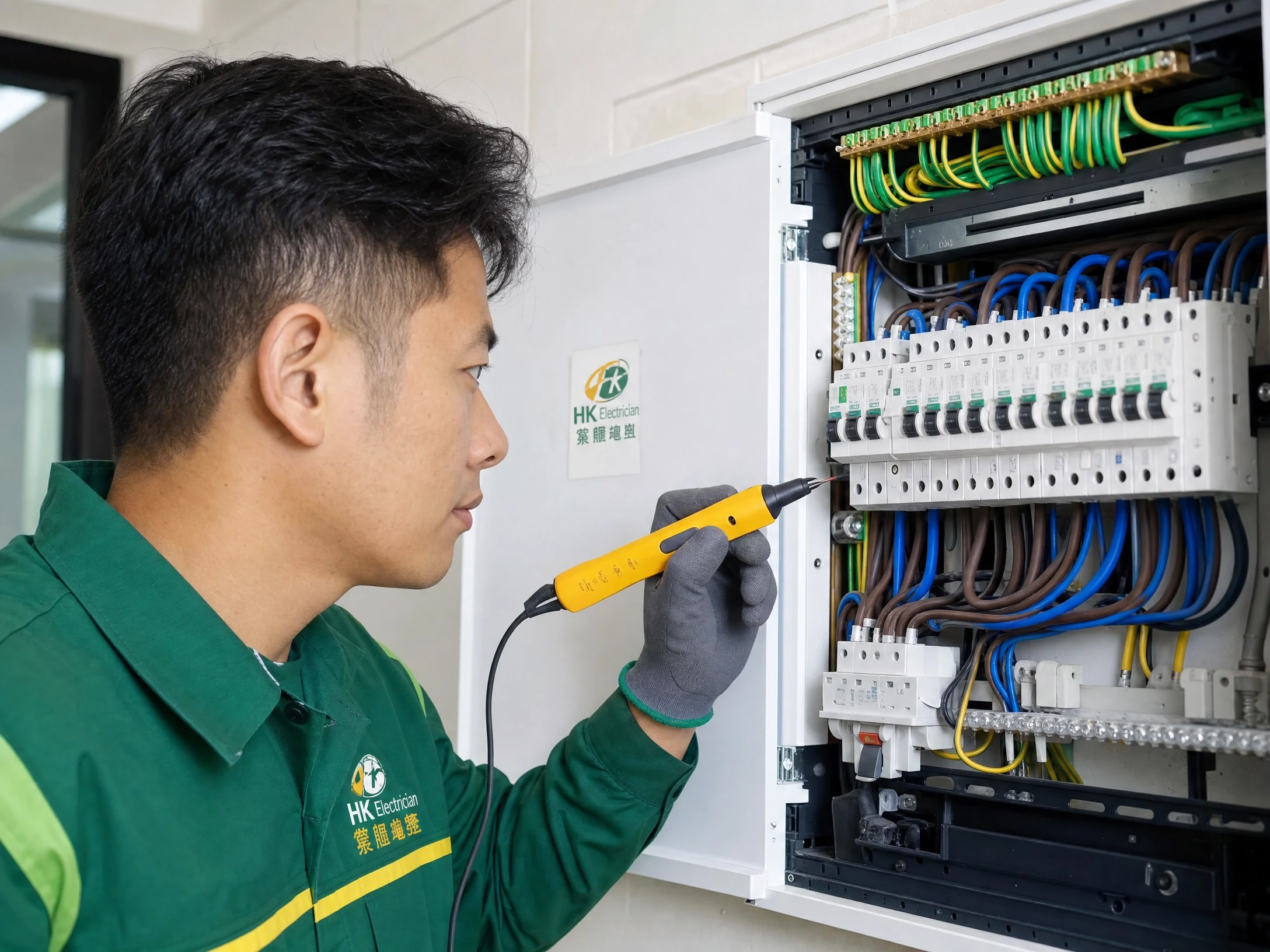
Electrical safety is a crucial aspect of home safety, yet often neglected until something goes wrong. According to the Fire Services Department, approximately 1,500 fires caused by electrical faults occur in Hong Kong annually, mostly due to aged wiring, overloading, or illegal modifications. An electrical incident can range from a simple trip to a devastating fire or fatal electrocution. This guide helps you understand home electrical safety basics, identify potential risks, and know when professional help is essential.
Understanding Your Home Electrical System
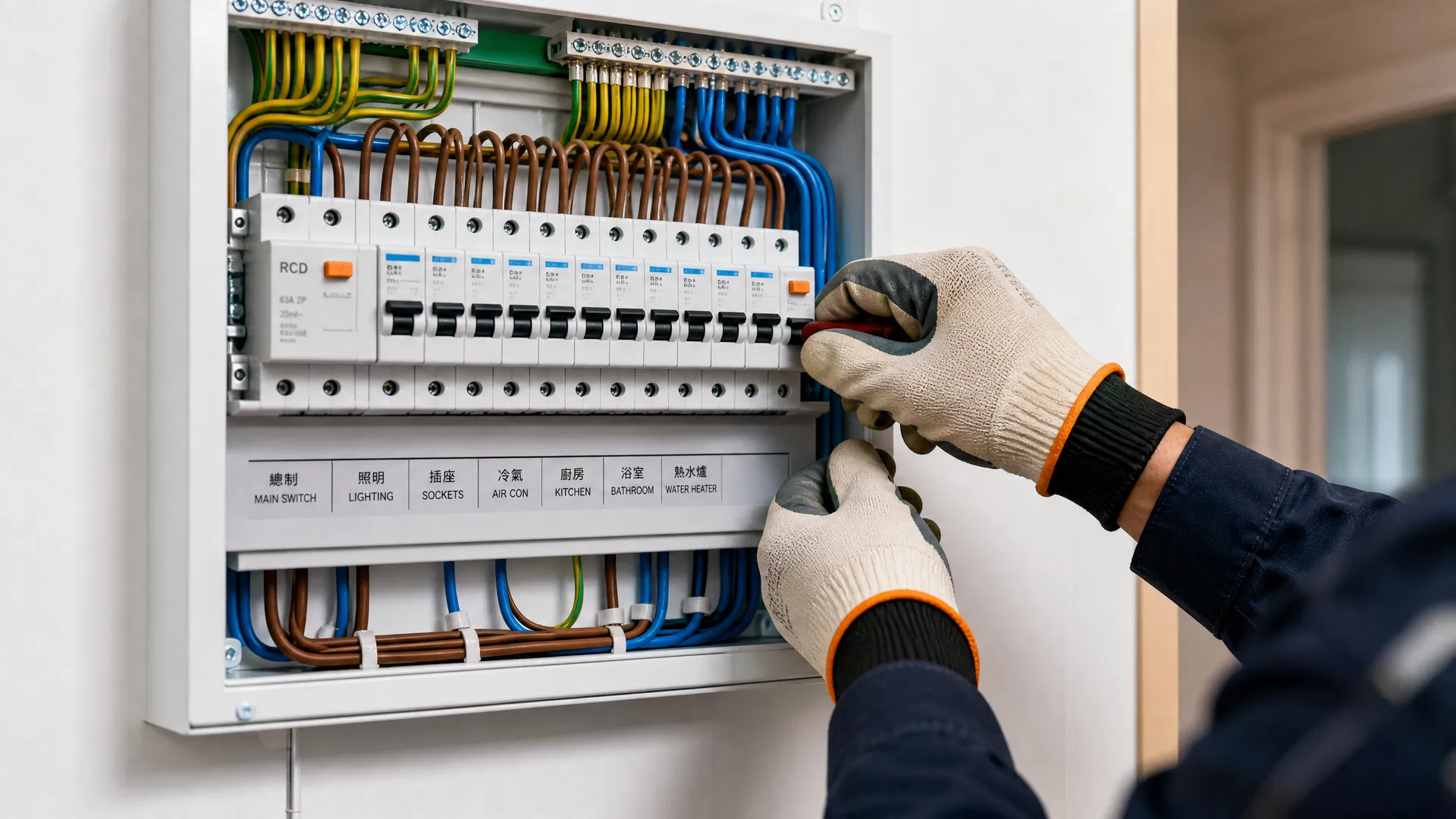
Hong Kong residential power supply is single-phase 220V/50Hz. Electricity travels from the utility's main switchroom via cables to your unit's distribution board (DB Box), which distributes power to individual circuits. A typical household DB contains: a main switch, residual current circuit breaker (RCCB/ELCB), and multiple miniature circuit breakers (MCBs) controlling different circuits (lighting, sockets, AC, kitchen, etc.). Understanding your DB layout is the first step in handling electrical issues.
Common Causes of Tripping
Tripping (circuit breaker activation) is the electrical system's protection mechanism, indicating circuit abnormality. Common causes include: **Overload** — too many appliances on one circuit exceeding the breaker's rated current; **Short circuit** — damaged wire insulation causing live and neutral to contact directly; **Earth leakage** — aged appliance or wire insulation allowing current to flow through the body or earth wire; **Appliance fault** — internal damage in an appliance causing abnormal current. If the breaker trips again immediately after resetting, the problem persists — never force the switch to stay on.
Dangerous Signs of Aging Wiring
Electrical wiring has a design lifespan of 20-30 years — beyond this, replacement should be considered. Warning signs include: sockets or switch plates becoming hot or discoloured, wire sheathing cracking or hardening, burning smell or scorch marks on walls, flickering or unstable lighting, fuses blowing or breakers tripping frequently, and mild tingling when touching appliance casings (earth leakage). If any of these signs appear, immediately stop using the affected circuit and contact a registered electrician.
| Warning Sign | Possible Cause | Risk Level | Recommended Action |
|---|---|---|---|
| Hot socket/switch | Poor contact/overload | High (fire risk) | Stop use, call electrician |
| Cracked wire sheathing | Aging/overheating | High | Arrange replacement |
| Burning smell/scorch | Overheating/short circuit | Critical | Immediate power off, emergency repair |
| Flickering lights | Poor contact/voltage instability | Medium | Check soon |
| Frequent tripping | Overload/leakage/short | High | Professional diagnosis |
| Tingling sensation | Earth leakage | Critical (life-threatening) | Immediate power off, emergency |
DB Upgrade: When Is It Needed?
Consider upgrading your distribution board when: it still uses old-style fuses instead of MCBs, no RCCB is installed, circuit count is insufficient for current appliance needs, the DB casing is rusted or damaged, or you're planning major renovation requiring additional circuits. DB upgrade costs typically $3,000-$8,000 (depending on circuit count), but this investment significantly improves electrical safety. The EMSD recommends all residences install RCCBs, which can cut off leaking circuits within 0.03 seconds, effectively preventing electrocution.
Which Electrical Work Requires a Registered Electrician?
Under the Electricity Ordinance (Cap. 406), the following work must be performed by registered electrical workers: installing or altering fixed electrical installations (including DB, wiring, sockets, switches), connecting or disconnecting power supply, and any repair or modification to the electrical system. Owners performing this work themselves is illegal, with maximum penalties of $100,000 fine and six months' imprisonment. After completion, the electrician must submit a 'Completion Certificate' (WR1/WR2 form) to EMSD.
Daily Electrical Safety Tips
These habits reduce electrical accident risk: don't daisy-chain power strips (overload risk), high-power appliances (AC, water heater, dryer) should use dedicated circuits, don't run wires under furniture or carpets (poor heat dissipation causes overheating), regularly check plugs and wires for damage, unplug non-essential appliances during thunderstorms, and keep the area in front of the DB clear for emergency access.
Electrical Planning During Renovation
If you're planning renovation, it's the ideal time to upgrade your electrical system. Recommendations: reassess circuit needs (modern homes have far more appliances than 20 years ago), provide sufficient sockets in each room (at least one double socket per wall), use waterproof sockets in kitchens and bathrooms, dedicate 20A circuits for AC units, and consider smart switch systems for future upgrades. OmniFix Decoration plans electrical layouts in detail during the design stage, ensuring both safety and practicality.
Emergency Situation Handling
For these emergencies: **Electrocution** — don't touch the victim directly; first cut power or use insulating objects (wooden stick, plastic chair) to separate them from the source, then immediately call emergency services. **Electrical fire** — cut power first (if safe), extinguish with dry powder or CO2 extinguisher, never use water. **Large-scale power outage** — check if it's your unit's breaker or the whole building; if your unit, check the DB; if building-wide, contact management.
Conclusion: Don't DIY Electrical Work
Electrical work differs from other home repairs — mistakes can be fatal. Any work involving fixed electrical installations should be handled by registered electrical workers. FixNow's electrical team all hold EMSD-issued registered electrician licences, legally and safely handling all home electrical issues. WhatsApp 9290 2652 to book an electrical inspection or repair service.
Official reference
For Hong Kong electrical, gas and mechanical-safety guidance, consult the official EMSD resource before making a safety-critical decision.
About the author
FixNow Registered Electrician Team
Frequently asked questions
How do I find a registered electrician?
Check the 'Register of Electrical Contractors' on the EMSD website, or book through FixNow — all our electricians hold valid registered electrician licences and can legally perform all residential electrical work.
How long is power off during a DB upgrade?
A typical DB upgrade requires 4-8 hours without power (depending on circuit count and complexity). Schedule during daytime and pre-charge phones and essential devices. If you have medical equipment requiring continuous power, discuss arrangements with the electrician in advance.
How many appliances can a power strip handle?
Depends on the power strip's rated wattage (typically 2,500W-3,000W) and total wattage of connected appliances. Generally don't exceed 80% of rated capacity. High-power appliances (heaters, kettles) should plug directly into wall sockets, not power strips. Never daisy-chain power strips.
What's the difference between RCCB and MCB?
MCBs (Miniature Circuit Breakers) protect circuits from overcurrent and short circuits — they trip when current exceeds rated value. RCCBs (Residual Current Circuit Breakers) detect earth leakage — when incoming and outgoing currents differ (meaning current is flowing through a person or earth wire), they cut the circuit within 0.03 seconds to prevent electrocution. Both serve different functions and are both essential.
Can old building wiring be left unchanged?
If wiring is over 25-30 years old, replacement is strongly recommended. Old wire insulation becomes brittle with age, increasing short circuit and fire risk. Even if no problems are visible externally, internal degradation may have occurred. Renovation is the ideal time to replace wiring, as it can be coordinated with other trades to minimise additional wall-chasing costs.