Flooring Guide
Flooring Comparison Guide: Solid Wood vs Engineered vs SPC for Hong Kong Homes
Published: 2026-03-10 · Updated: 2026-07-08 · 6 min read
TL;DR
SPC, LVT, or engineered wood — which flooring suits you? A comprehensive comparison of waterproofing, durability, comfort, cost, and installation methods for Hong Kong homes. Use the practical checkpoints below to separate a low-risk next step from work that needs a qualified professional. Keep a written record of the scope, timing and any change agreed on site.
Material decision checklist
| Decision point | Compare | Confirm before order |
|---|---|---|
| Daily use | Moisture, heat and impact resistance | The exact product code and installation method |
| Health and maintenance | Cleaning needs, emissions information and lifecycle | Care instructions and replacement availability |
| Budget | Installed cost, not material price alone | Hardware, trims, delivery and remedial work |
Visual repair guide
Flooring is one of the most impactful elements in renovation, affecting both aesthetics and living comfort. Choose wrong, and you'll face premature replacement or moisture damage affecting health. The mainstream flooring options in Hong Kong include SPC (Stone Plastic Composite), LVT/Vinyl (Luxury Vinyl Tile), Engineered Wood, and traditional Solid Wood. Each has pros and cons — the key is choosing based on your lifestyle, budget, and space requirements. According to Hong Kong renovation industry statistics, the most popular flooring types in 2025 are SPC (42%), Engineered Wood (28%), LVT (18%), and Solid Wood (12%).
SPC Flooring: The Value Champion
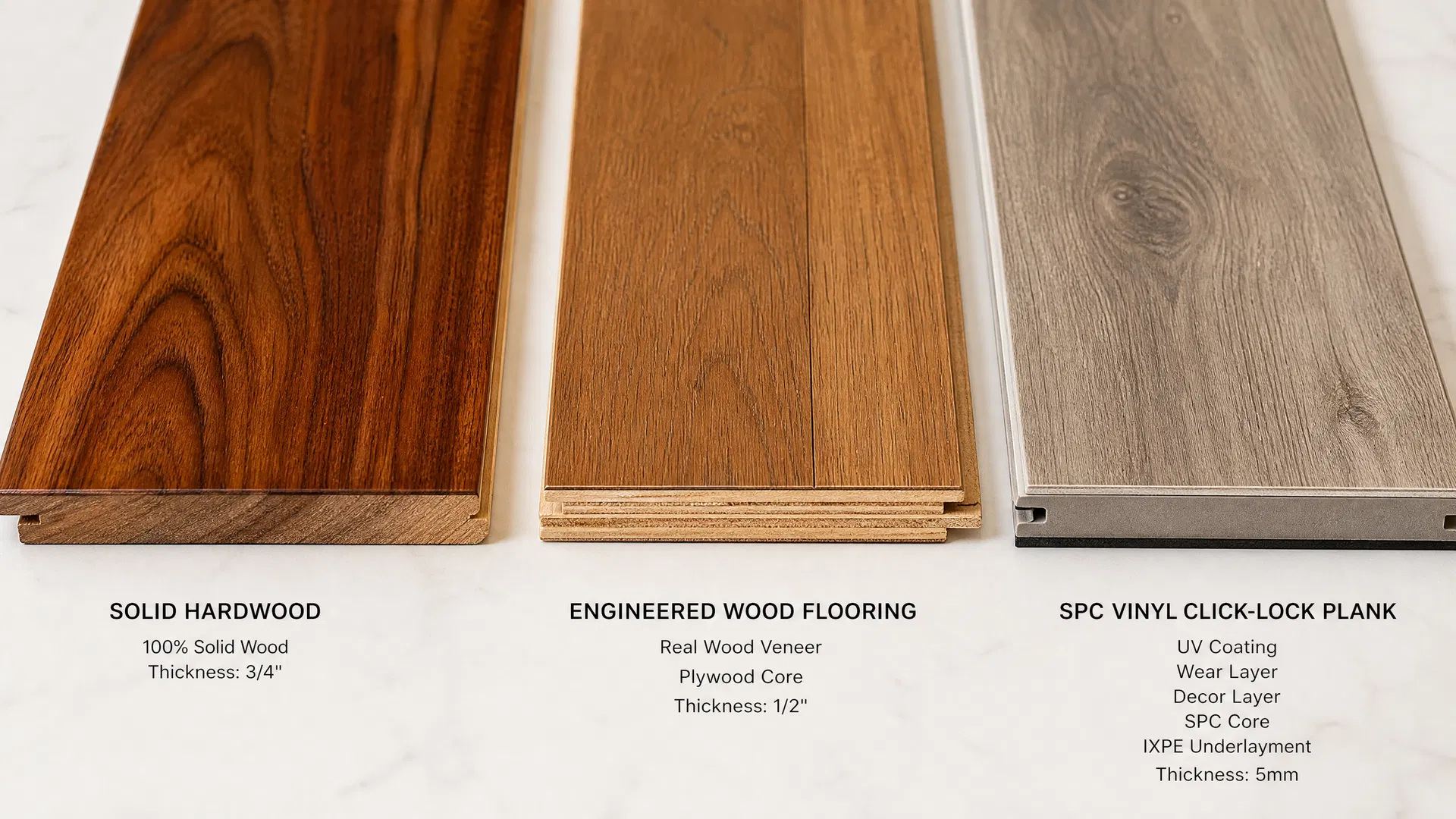
SPC (Stone Plastic Composite) flooring is made from stone powder and PVC pressed together, creating a rigid and stable core. Its biggest advantages are 100% waterproofing, simple installation (click-lock without glue), and relatively affordable pricing. SPC flooring is typically 4-6mm thick with a wear layer (usually 0.3-0.5mm) that can mimic various wood and stone patterns. Ideal for bathrooms, kitchens, and homes with children or pets. Drawbacks include harder underfoot feel, average sound insulation, and slight discolouration with prolonged sun exposure.
LVT/Vinyl Flooring: Soft and Comfortable
LVT (Luxury Vinyl Tile) differs from standard vinyl mainly in thickness and texture. LVT is typically thicker (2-5mm) with more realistic textures and better underfoot comfort. Advantages include waterproofing, soft comfort (softer than SPC), good sound insulation, and extensive design options. Drawbacks are lower scratch resistance than SPC, potential indentation from heavy furniture, and some products requiring adhesive installation. Ideal for bedrooms and living rooms where comfort is prioritised.
Engineered Wood: Natural Texture
Engineered wood flooring has a multi-layer structure: a real wood veneer surface (typically 2-4mm thick) over multiple plywood or HDF layers. It retains solid wood's natural texture and warm feel while being more stable and less prone to warping. Priced between SPC and solid wood. Drawbacks include incomplete waterproofing (prolonged water exposure causes damage), need for regular maintenance, and the veneer can only be refinished 1-2 times. Suitable for dry spaces like living rooms and bedrooms for owners seeking natural wood aesthetics.
| Comparison | SPC | LVT/Vinyl | Engineered Wood | Solid Wood |
|---|---|---|---|---|
| Waterproofing | ★★★★★ | ★★★★★ | ★★★ | ★★ |
| Scratch Resistance | ★★★★ | ★★★ | ★★★ | ★★★★ |
| Comfort | ★★★ | ★★★★ | ★★★★★ | ★★★★★ |
| Sound Insulation | ★★★ | ★★★★ | ★★★★ | ★★★★★ |
| Installation | Easy (click) | Medium | Medium | Complex |
| Price (per sqft) | $15-$40 | $20-$50 | $40-$80 | $80-$200+ |
| Lifespan | 15-25 yrs | 10-20 yrs | 20-30 yrs | 30-50 yrs |
| Best For | Whole home/wet | Whole home | Dry areas | Dry areas |
Hong Kong Climate Impact on Flooring
Hong Kong's high humidity and temperature variations pose special challenges for flooring. Traditional solid wood expands during moisture return periods and contracts in dry seasons, creating gaps. SPC and LVT contain no natural wood and are least affected by humidity. Engineered wood's multi-layer structure is much more stable than solid wood, but we still recommend moisture barrier treatment (laying a DPM) before installation. If you live on lower floors or near the coast, prioritise SPC or LVT.
Installation Methods Compared
**Click-lock installation** (mainly SPC): No adhesive needed — boards connect via click mechanisms and can be laid directly over existing flooring (if level). Advantages: fast installation, removable and reusable, no damage to existing floor. **Adhesive installation** (LVT/some engineered): Boards are glued to the subfloor with specialist adhesive — stable but difficult to remove. **Nail-down** (traditional solid): Requires a subfloor base then nail fixing — most complex and expensive. OmniFix Decoration recommends click-lock SPC or engineered wood for most families, balancing aesthetics, practicality, and value.
Flooring Purchase Tips
Key points when buying flooring: confirm formaldehyde emission meets E1 or E0 standards (lower is better); check wear layer thickness (minimum 0.3mm residential, 0.5mm commercial); note total thickness (too thin and you'll feel subfloor unevenness); confirm whether silent underlay is included (IXPE underlay offers better sound insulation); and request samples to test at home under natural light to assess colour and texture.
Flooring Maintenance Guide
Different flooring needs different care: SPC/LVT only needs a slightly damp mop daily — avoid wax or abrasive cleaners; engineered wood benefits from wood floor care oil every 3-6 months — avoid excessive water contact; traditional solid wood needs regular waxing or oiling and may need sanding and refinishing every 3-5 years. All flooring types should be protected from sharp objects — attach protective pads to furniture legs.
Budget Reference
For a 400 sqft unit, approximate whole-home flooring costs (including installation): SPC ~$8,000-$18,000; LVT ~$10,000-$22,000; Engineered Wood ~$18,000-$35,000; Solid Wood ~$35,000-$80,000+. These include basic subfloor preparation and edging but exclude old flooring removal (if needed, add ~$3,000-$6,000).
Conclusion: Choose Flooring That Matches Your Lifestyle
No flooring is universally 'best' — only 'best for you'. If you prioritise value and waterproofing, choose SPC. If you want comfort underfoot, choose LVT or engineered wood. If you desire ultimate natural texture and are willing to maintain it, choose solid wood. OmniFix Decoration recommends the most suitable flooring solution based on your lifestyle, budget, and space usage during the design stage. WhatsApp 9290 2652 for a free on-site measurement and consultation.
Assessing Hong Kong Climate and Moisture Tolerance Selecting flooring materials in Hong Kong requires careful consideration of extreme seasonal humidity and frequent temperature shifts. Unlike drier climates, apartments here often experience relative humidity exceeding eighty percent during spring and summer months, which can cause certain organic wood floors to warp, buckle, or expand. When comparing solid wood, engineered wood, porcelain tiles, and Stone Plastic Composite (SPC) vinyl, homeowners must prioritize dimensional stability over initial aesthetic appeal. Porcelain and ceramic tiles remain exceptionally resilient against moisture and heavy foot traffic, making them a traditional favorite for living rooms and kitchens. However, they can feel cold during winter and require meticulous grouting work to prevent mold accumulation in damp corners. On the other hand, SPC flooring has gained immense popularity due to its rigid core construction, 100 percent waterproof properties, and realistic wood or stone textures that withstand high humidity without structural deformation. ### Practical Site Inspection and Subfloor Preparation Before finalizing any flooring purchase or signing installation contracts with contractors, conducting a thorough on-site subfloor inspection is essential. Uneven subfloors are a common issue in both older tenement buildings and newly handed-over housing estates across the city. Contractors must use a spirit level and moisture meter to check the screed layer before laying any material. If the concrete base is uneven or damp, adhesives will fail and floating floors will produce hollow sounds or premature squeaks when walked upon. Homeowners should request a detailed breakdown of self-leveling compound application costs and ensure that skirting board installation and door clearance trimming are accounted for in the quotation. Failing to verify door bottom clearances before installing thick SPC or engineered wood often results in jammed doors that require costly carpentry adjustments after the flooring is completed. ### Cost-Benefit and Maintenance Checklist To ensure long-term satisfaction and avoid unexpected renovation expenses, adopting a structured decision-making checklist is vital during material selection. First, evaluate daily maintenance routines and cleaning effort required for each option; polished stone or glossy tiles show footprints and dust easily, whereas textured laminate or matte SPC surfaces hide minor daily wear more effectively. Second, calculate the total lifecycle cost, factoring in delivery surcharges for upper-floor walk-ups or housing estates with strict lift-booking regulations. Finally, maintain clear written records of batch numbers, warranty terms, and leftover spare tiles or planks for future repairs. Having a few extra boxes stored securely ensures seamless matching if localized water damage or accidental scratching occurs years later, saving significant time and hassle. <!-- P2-CONTENT-EXPANSION -->
Official reference
Check the official EPD resource for Hong Kong environmental information relevant to material selection and disposal.
About the author
OmniFix Decoration Flooring Consultant
Frequently asked questions
Does SPC flooring contain formaldehyde?
Quality SPC flooring's core is stone powder and PVC, which is formaldehyde-free. However, the printed and wear layers may use adhesives with trace formaldehyde. Look for E0 or FloorScore certification when purchasing to ensure extremely low emissions.
Can flooring be laid over existing tiles?
Yes! Click-lock SPC flooring can be laid directly over flat tiles without removing them. The prerequisite is that tiles are level without significant lifting or hollowing. If tiles are uneven, self-levelling compound is needed first.
Which flooring is best for homes with pets?
SPC flooring is best for pet owners: 100% waterproof (no worry about accidents), wear layer resists claw marks, easy to clean, and doesn't absorb odours. Choose products with 0.5mm+ wear layer.
Can engineered wood be used in bathrooms?
Not recommended. Although engineered wood is more moisture-resistant than solid wood, prolonged water contact still causes the veneer to swell and delaminate. For bathrooms, use SPC, LVT, or traditional tiles.
How long does flooring installation take?
Click-lock SPC is fastest — about 1-2 days for a 400 sqft unit. Adhesive LVT takes 2-3 days (adhesive curing time). Engineered wood nail-down takes 3-4 days. Traditional solid wood with subfloor takes 5-7 days. These exclude old flooring removal and subfloor preparation time.