Furniture Assembly & Wall Mounting Guide: Safety Tips
Furniture Assembly & Wall Mounting Guide: Safety Tips
Published: 2026-08-15 · Updated: 2026-08-15 · 8 min read
TL;DR
Comprehensive guide to furniture assembly and wall mounting safety in Hong Kong. Learn wall checks, hardware limits, and hire experts today. Use the practical checkpoints below to separate a low-risk next step from work that needs a qualified professional. Keep a written record of the scope, timing and any change agreed on site.
Planning decision checklist
| Stage | Action today | Confirm before proceeding |
|---|---|---|
| Scope | Write down the outcome you need | What is included, excluded and contingent |
| Time | Set a realistic milestone sequence | Access, approvals and disruption constraints |
| Cost | Compare like-for-like quotations | Payment stage, variation process and warranty |
Visual repair guide
When undertaking furniture assembly and wall mounting projects in Hong Kong homes, the primary priority is verifying wall structures, load-bearing limits, and concealed utility lines while strictly observing safety boundaries. This article provides a comprehensive analysis of wall inspection, hardware selection, installation sequences, and professional assistance timing to safeguard your household structure and personal safety.
When DIYers install shelves, mount curtains, or perform general furniture assembly, they often overlook structural limits, leading to collapses or wall damage. Mastering correct hardware accessories and standard installation steps not only extends equipment lifespan but also eliminates structural risks caused by loose screws or degraded walls.
Modern Hong Kong households frequently face challenges of limited storage space, and whether purchasing modular cabinets or hiring technicians, preliminary understanding of wall materials is indispensable. Many mistakenly assume that any heavy object can be anchored into walls with a simple drill and screw, ignoring physical load capacity variations across different partition types.
Understanding the underlying mechanics of structural wall anchorage ensures that every mounted fixture remains stable over years of daily wear and tear. In urban residential buildings, space constraints mean that vertical wall space is heavily utilized for hanging storage units, entertainment centers, and decorative fixtures.
Without proper planning and execution, drilling into reinforced concrete or brickwork without knowing the internal layout can cause catastrophic failure. Therefore, establishing a systematic approach to pre-installation checks is essential for every homeowner and tenant residing in high-density residential properties.
Furthermore, interior spatial dynamics require meticulous planning before any mechanical fasteners are driven into masonry surfaces. Property owners must evaluate not only static loads but also dynamic stress factors such as swinging doors, vibration from heavy foot traffic, and seismic tremors.
A failure in wall anchorage can result in expensive property damage, personal injury, and compromised electrical safety. Consequently, adopting industry-standard safety protocols and consulting authorized engineering manuals represents the foundation of successful residential maintenance work across all districts.
1. What safety checks are necessary before furniture assembly and wall mounting?
Before commencing any installation, residents must conduct a thorough environmental and structural assessment of the work area. Many Hong Kong residences feature load-bearing concrete walls, partition brick walls, or lightweight plasterboard, each offering vastly different load capacities.
During inspection, it is recommended to consult official government guidelines, such as GovHK maintenance tips, to understand basic compliance requirements and safety boundaries for home upkeep.
Additionally, use a professional metal detector to scan walls for concealed water pipes or electrical cables, preventing serious hazards like electrical shocks, short circuits, or burst pipes during drilling.
If wall hollows, crumbling plaster, or severe cracks are found, refrain from forced wall mounting and perform repairs or seek professional evaluation first to ensure the base can support mechanical loads.
Furthermore, assessing the ambient humidity and surface condition of the wall ensures that anchors will not loosen due to moisture seepage or structural aging over time.
Homeowners should also verify whether the mounting location is subject to frequent vibrations, such as areas near heavy doors or vibrating household appliances, which require upgraded locking mechanisms.
Professional inspectors always examine the plaster layer integrity because superficial paint or wallpaper can easily mask internal structural degradation, hollow spots, and hidden dampness that severely reduce screw retention strength.
Establishing a clear pre-drilling checklist minimizes unexpected surprises and ensures that all safety measures are fully implemented before heavy equipment or shelving units are lifted into position.
Taking these precautionary steps safeguards both the property structure and the inhabitants against sudden structural failures during heavy domestic usage.
2. How to correctly assess wall materials and drilling risks?
Identifying wall materials is the first line of defense for secure wall mounting. Common solid red brick walls, concrete load-bearing walls, and hollow block walls require different anchoring methods, and incorrect selection leads to pullout failures.
When executing furniture assembly or wall anchoring, match wall plugs and screws appropriately. For instance, concrete walls require expansion bolts, whereas plasterboard requires specialized hollow wall anchors.
According to the Electrical and Mechanical Services Department (EMSD) general safety guidelines, operations involving electrical and concealed works demand extreme caution, avoiding drilling directly above cable paths.
Residents can also review Buildings Department drainage and structural FAQs before proceeding to ensure modifications comply with building safety regulations, safeguarding shared rights.
It is also vital to understand the difference between structural load-bearing walls and non-structural partition walls, as drilling into the latter requires special care to avoid weakening structural integrity.
Using appropriate drill bits matched to the wall material prevents chipping, cracking, and oversized pilot holes that compromise anchor grip and stability.
When encountering hollow partition walls, standard plastic expansion plugs will fail because they lack the necessary friction against solid masonry. Toggle bolts or spring anchors must be utilized instead to distribute the load across a wider rear surface area.
A thorough understanding of building blueprints and wiring diagrams further reduces the risk of accidental utility strikes during the installation phase.
Maintaining strict adherence to technical specifications ensures that every fastener achieves maximum mechanical grip, protecting the wall substrate from irreversible damage.
3. What hardware and load-bearing standards apply to shelf installation and heavy object hanging?
The security of shelves and hanging heavy objects depends on support point counts, screw lengths, and wall anchor limits. Below is a comparative table of standard wall mounting specifications.
| Item Type | Recommended Wall Material | Common Hardware Accessories | Safe Load Limit | Precautions |
|---|---|---|---|---|
| Light Decorative Shelves | Concrete / Solid Brick | 6mm Wall Plug + Wood Screw | 10 - 15 kg | Avoid placing excessive books or appliances |
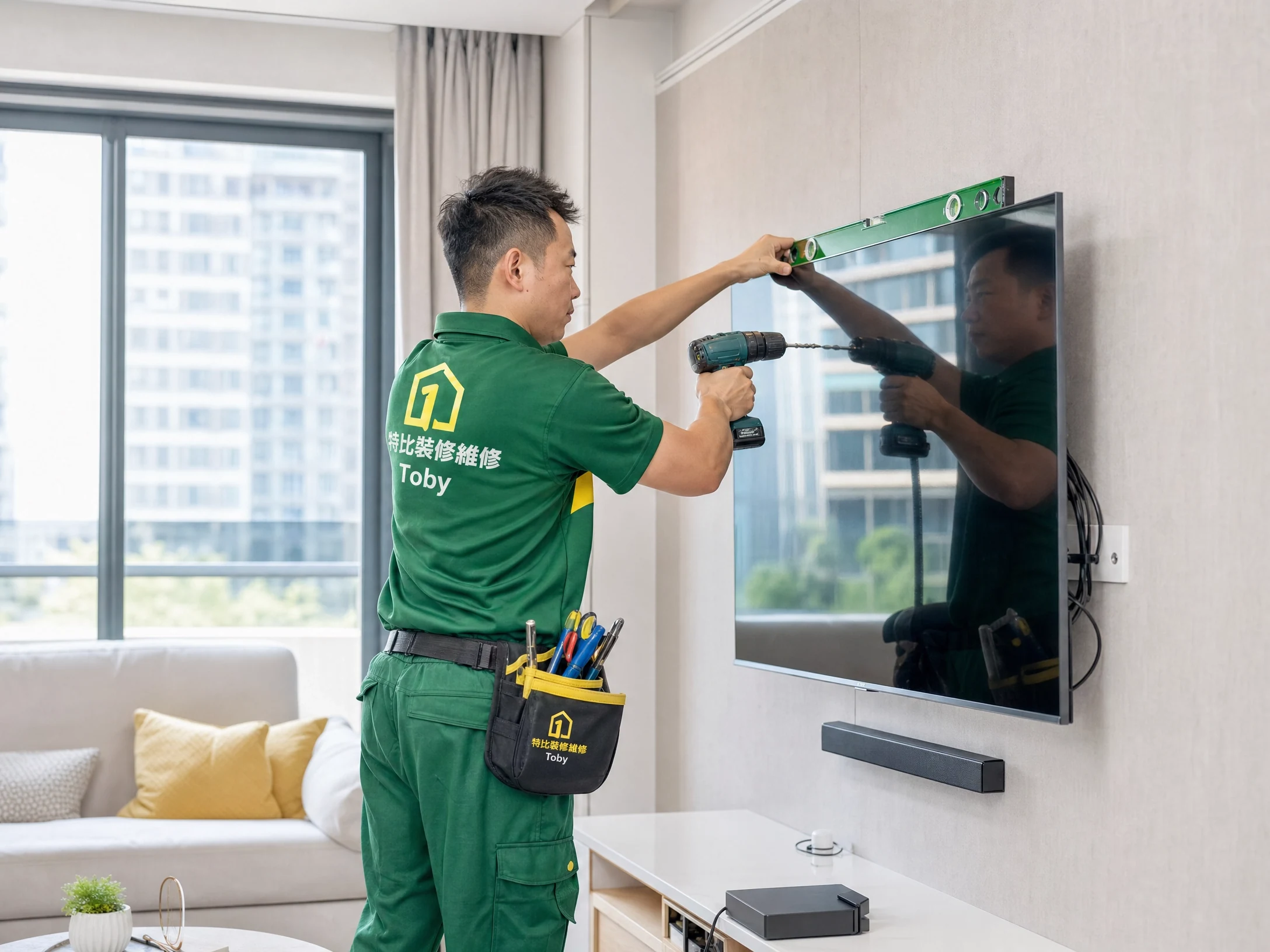
| TV Wall Mount Bracket | Concrete Load-Bearing Wall | M8 Expansion Bolt Assembly | 40 - 60 kg | Must be fixed symmetrically with a spirit level |
| Solid Wood Storage Cabinet | Concrete / Masonry Anchor | High-Strength Chemical Anchor | Over 80 kg | Requires anti-tip straps for dual security |
During actual execution, when performing shelf installation, ensure uniform bracket spacing and level calibration to prevent screw loosening from uneven stress.
For complex custom-built furniture anchoring, hiring experienced technicians ensures stability under Hong Kong's humid and seismic-adjacent environment.
Selecting high-grade stainless steel or corrosion-resistant alloy screws prevents rusting in high-humidity environments such as kitchens and bathrooms.
Load calculations should always include a safety margin of at least twenty to thirty percent above the maximum expected static weight to account for dynamic loading during daily use.
Furthermore, torque specifications provided by hardware manufacturers should be strictly followed; overtightening can strip screw threads or crack masonry, while undertightening allows micro-movements that eventually lead to catastrophic joint failure.
Evaluating the shear and tensile strength of chosen fasteners guarantees long-term structural reliability under demanding residential conditions.
4. What is the installation sequence for furniture assembly, adding electrical sockets, and curtain installation?
During home renovations or move-ins, scheduling sequence directly impacts overall aesthetics and safety. A logical workflow avoids rework or damage to finished surfaces.
Concealed works come first; if you need to add an electrical socket, complete conduit routing or concealed wiring before carpentry and painting to prevent reckless drilling later.
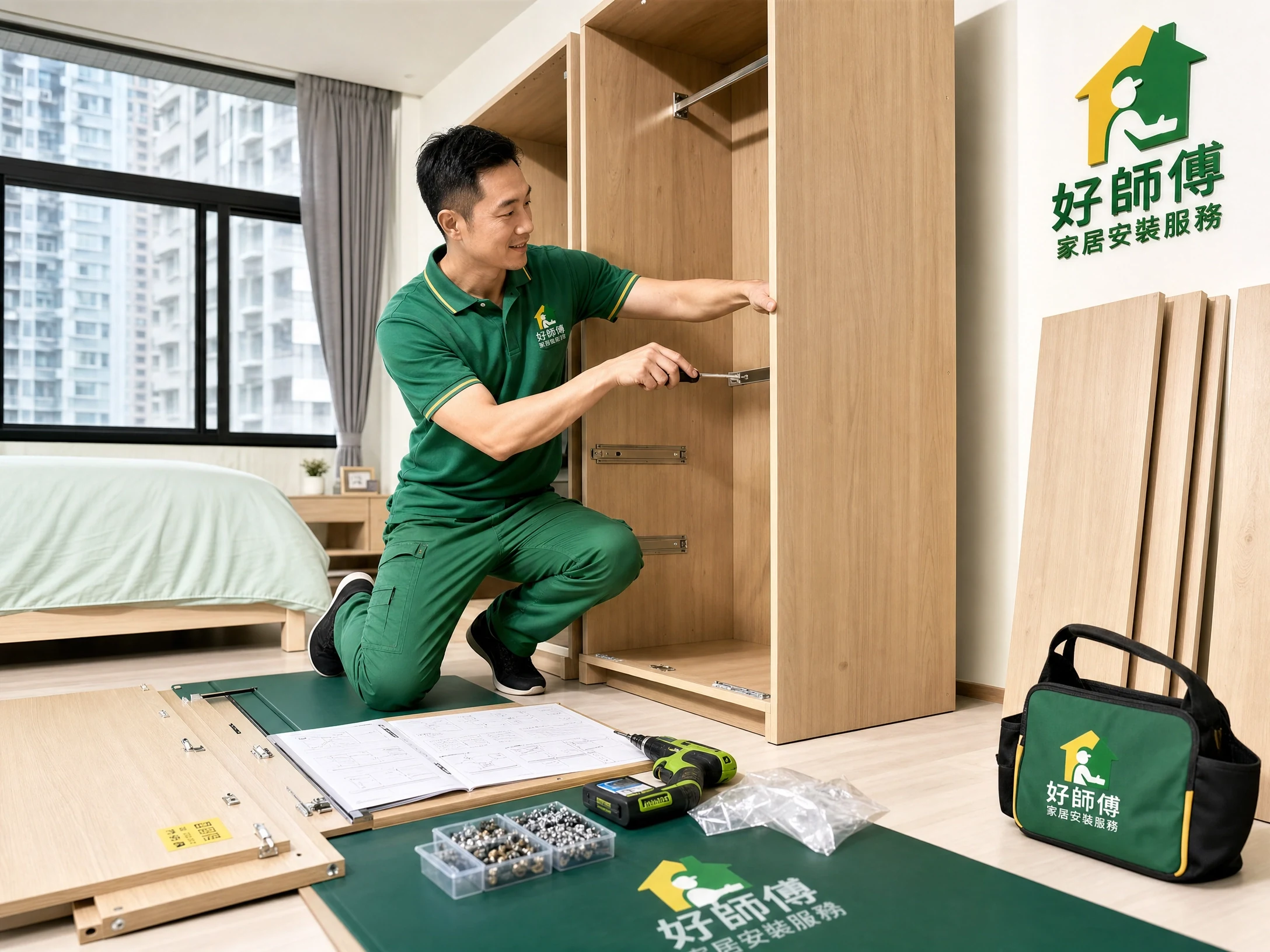
Next, execute furniture assembly, positioning cabinet units securely against walls to prevent tipping hazards during use.
Finally, handle curtain installation and fine storage fittings, ensuring curtain tracks do not conflict with high-level cabinetry.
Coordinating different trades and DIY steps ensures that wet works, electrical modifications, and carpentry do not interfere with each other.
Proper sequencing also minimizes dust and debris accumulation on newly assembled furniture and finished textile installations like curtains and upholstery.
Failing to establish a proper timeline often results in finished walls being damaged when attempting to route cables or mount heavy fixtures after painting and wallpapering are already complete.
A well-structured workflow guarantees that each phase builds securely upon the previous one, achieving optimal durability and visual presentation.
Following a methodical execution plan prevents costly mistakes and ensures that all integrated home systems function harmoniously.
5. When must you stop DIY and seek qualified professional technicians?
While many simple household tasks can be handled by residents, continuing DIY in specific scenarios carries extreme safety risks, demanding professional help immediately.
If drilling produces sparks, unusual odors, or suspected hits on electrical wires and water pipes, stop work instantly and shut off main power or water valves to prevent escalation.
For heavy TV wall mounting exceeding 30 kg, elevated heavy cabinets, or precise wiring modifications like adding an electrical socket, non-professionals risk severe structural failure due to mismatched hardware.
Booking qualified technicians through professional channels provides professional detection, precision drilling, and maintenance guarantees, giving you complete peace of mind.
Recognizing personal limitations in tools, expertise, and physical strength is a crucial aspect of responsible home maintenance in urban apartments.
Professional technicians bring specialized diagnostic equipment, insurance coverage, and years of practical experience that safeguard your property against costly restoration mistakes.
Attempting complex structural modifications without professional support exposes residents to severe liability and safety hazards that far outweigh any short-term cost savings.
When in doubt, consulting licensed professionals ensures that all installations meet stringent building codes and manufacturer safety warranties.
Prioritizing expert intervention during high-risk operations guarantees a secure living environment for all household occupants.
Which service guide is most relevant to the next step?
Use the following service guides to understand the scope that best matches the issue before deciding whether an inspection or quotation is appropriate:
- furniture assembly hong kong: a focused guide to the scope, safety considerations and contact route for this type of issue.
- tv wall mounting hong kong: a focused guide to the scope, safety considerations and contact route for this type of issue.
- add power socket hong kong: a focused guide to the scope, safety considerations and contact route for this type of issue.
- curtain installation hong kong: a focused guide to the scope, safety considerations and contact route for this type of issue.
- custom furniture hong kong: a focused guide to the scope, safety considerations and contact route for this type of issue.
Official reference
Use the Housing Authority’s official guidance as a starting point when a housing, move-in or renovation decision affects a Hong Kong home.
About the author
FixNow Home Repair Editorial Team
Frequently asked questions
How to prevent cabinet tipping during DIY furniture assembly?
When assembling tall cabinets, always use anti-tip brackets supplied by the manufacturer to securely anchor the unit to load-bearing or solid brick walls.
How to determine sufficient screw length when executing shelf installation?
Screw length should equal wall plug length plus bracket thickness and plaster layer thickness, ensuring full penetration into solid structural layers.
Can residents add electrical sockets on walls by themselves?
Involving concealed high-voltage wiring and junction box modifications carries high legal and safety risks; non-licensed individuals must not wire independently.
What to do if encountering hollow walls or plasterboard above window frames during curtain installation?
Plasterboard cannot sustain curtain tension; use internal timber studs, specialized heavy-duty hollow metal anchors, or top-mounted brackets.
Is professional measurement and installation required for custom-built furniture wall mounting?
Yes, custom-built furniture features precise dimensions and high weight; professional teams conduct on-site adjustments and secure wall anchoring to prevent deformation.
How to respond if suspecting hitting water pipes or electrical cables while drilling?
Stop drilling immediately, shut off main power or water valves, inspect for water seepage or tripping, and avoid pulling out bits blindly.