Budget Allocation
Renovation Budget Allocation Guide: How to Spend HK$300K Wisely
Published: 2026-08-17 · Updated: 2026-08-17 · 7 min read
TL;DR
Planning a full house renovation but unsure how to allocate your renovation budget? This guide breaks down a $300,000 budget allocation strategy, covering design fees, hard furnishings, custom furniture, and soft furnishings to help you control costs. Use the practical checkpoints below to separate a low-risk next step from work that needs a qualified professional. Keep a written record of the scope, timing and any change agreed on site.
Planning decision checklist
| Stage | Action today | Confirm before proceeding |
|---|---|---|
| Scope | Write down the outcome you need | What is included, excluded and contingent |
| Time | Set a realistic milestone sequence | Access, approvals and disruption constraints |
| Cost | Compare like-for-like quotations | Payment stage, variation process and warranty |
Visual repair guide


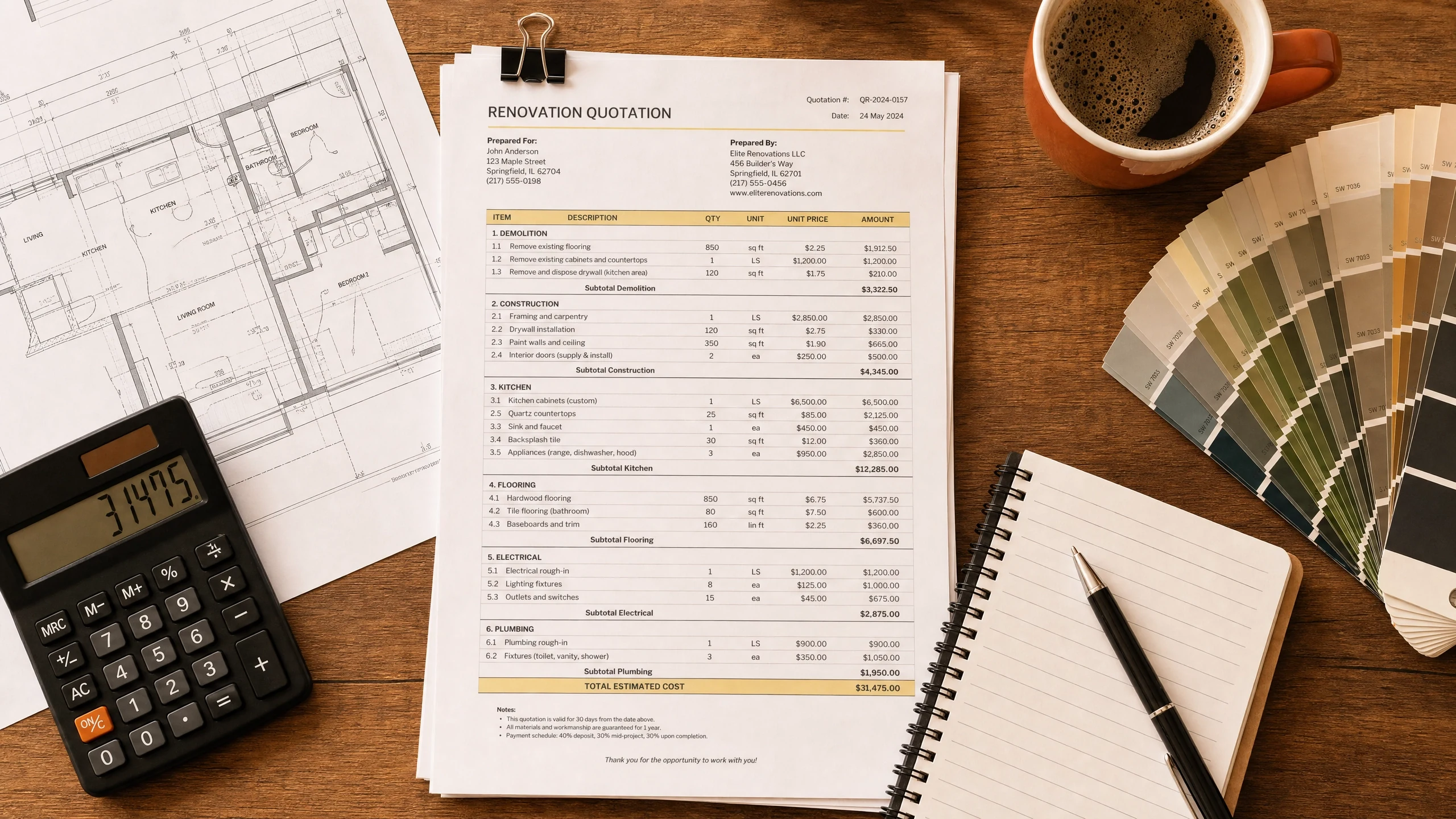
Preparing to move into a new home or refurbish an old apartment, the most headache-inducing part is undoubtedly how to allocate your renovation budget. Many homeowners start with excitement and high hopes for their future home, only to find themselves severely over budget halfway through the project, scrambling for funds, compromising on quality, or even facing an unfinished project due to a lack of capital. In reality, with proper budget planning from the start, a $300,000 budget can perfectly create your ideal cozy home.
How exactly should you smartly allocate limited funds across design, hard furnishings, custom furniture, and soft furnishings? How can you avoid falling into the quotation traps of renovation companies? Today, we will break down a practical and comprehensive renovation budget allocation guide, teaching you how to spend every penny wisely and ensuring the entire renovation process goes smoothly.
1. The Golden Ratio for Renovation Budget Allocation
Before starting a full house renovation, we strongly recommend homeowners refer to a "golden ratio" commonly used in the industry. This ratio is the wisdom accumulated from countless renovation experiences and can help you establish a clear financial framework in the early stages. Generally, a complete renovation project can be divided into four main sectors: hard furnishing works, custom furniture, design fees and management, and soft furnishings with appliances.
| Budget Item | Suggested Allocation Ratio | $300,000 Budget Reference | Main Coverage |
|---|---|---|---|
| Hard Furnishing Works | 40% - 50% | $120,000 - $150,000 | Demolition, masonry, plumbing & electrical, painting, waterproofing |
| Custom Furniture | 20% - 30% | $60,000 - $90,000 | Kitchen cabinets, wardrobes, platform beds, TV cabinets, storage units |
| Design Fees & Management | 10% - 15% | $30,000 - $45,000 | Space planning, drafting, project supervision, material sourcing |
| Soft Furnishings & Appliances | 10% - 20% | $30,000 - $60,000 | Sofas, curtains, lighting, air conditioners, refrigerators, washing machines |
This ratio is not set in stone; you can fine-tune it according to your actual needs and lifestyle. For example, if you have extremely high requirements for interior design and want your home to have a unique style and taste, you may need to reserve more funds for design fees; if the apartment is relatively small and you want to increase storage space, the proportion for custom furniture will correspondingly increase. The most important thing is to have a clear budget cap before starting the work and strictly adhere to it.
2. Hard Furnishing Works: The Unignorable Concealed Projects
Hard furnishing works are the backbone of the entire renovation and the part where you should least cut corners. Hard furnishings include demolishing old decor, masonry plastering, plumbing and electrical routing, painting, and waterproofing. Most of these concealed projects will be buried in the walls or underground. Once they go wrong, the future maintenance costs and hassles will be immense, sometimes even requiring breaking open the walls to redo the work.
According to the guidelines of the Buildings Department's Minor Works Control System, structural alterations or specific plumbing and electrical modifications must be carried out by qualified registered contractors to ensure compliance with safety standards. Especially for waterproofing in bathrooms and kitchens, it must be done thoroughly, and water seepage tests must not be taken lightly. Otherwise, if future leaks affect the floor below, the compensation amount could easily exceed the renovation costs you saved. Therefore, when allocating your renovation budget, the hard furnishing part must take the largest share to ensure living safety and durability. It is better to save money on decorations than to compromise on plumbing, electrical, and waterproofing works.
3. Custom Furniture: Balancing Practicality and Aesthetics
In Hong Kong, where land is scarce and expensive, how to make good use of every inch of space is a core topic in full house renovation. Custom furniture is the best solution to storage problems. Whether it's hanging cabinets in the kitchen, platform beds in the bedroom, or feature TV cabinets in the living room, they can be tailor-made according to the actual dimensions of the unit, maximizing space utilization and avoiding awkward dead corners.
In terms of budget allocation, custom furniture usually accounts for 20% to 30% of the overall budget. To control expenses in this area, you can start with the materials and hardware accessories. For instance, using highly moisture-resistant plywood for the cabinet body, and choosing cost-effective laminates or fireproof boards for the panels, rather than expensive solid wood or baked enamel panels. For hardware, you can choose premium brands for frequently used hinges and tracks to ensure durability, while opting for standard models for less used parts. This maintains aesthetics while effectively controlling costs.
4. Design Fees: The Value of Investing in Professional Interior Design
To save money, many homeowners choose to draw the plans themselves or leave it entirely to the renovation workers, thereby saving on design fees. However, a professional interior designer provides not only beautiful visual effects but, more importantly, space planning, flow design, and lighting layout. They can create the most ergonomic living environment based on your lifestyle.
Paying a reasonable design fee can get you detailed construction drawings and 3D renderings, greatly reducing alterations and extra expenses caused by miscommunication during construction. The designer will also help you control the overall renovation budget, selecting the most suitable materials within limited funds to ensure the final result meets expectations. Additionally, designers usually have familiar suppliers and can help you purchase building materials at more favorable prices. This investment often brings returns beyond expectations.
5. Soft Furnishings and Appliances: Flexible and Adaptable
Soft furnishings and appliances are the parts that best reflect personal taste, and they also offer the most budget flexibility. Soft furnishings include sofas, dining tables, curtains, carpets, and decorative paintings. Unlike hard furnishings, these items are not permanent and can be replaced at any time, so under a tight budget, you can choose to purchase them in stages without needing to buy all top-tier products at once.
As for appliances, it is recommended to prioritize essential large appliances like air conditioners, refrigerators, and washing machines, and choose products that meet the Electrical and Mechanical Services Department (EMSD) Grade 1 Energy Label, which can save a lot on electricity bills in the long run. Other small appliances or non-urgent soft furnishings can be added slowly after moving in, reducing initial financial pressure. You can also keep an eye out for holiday promotions or clearance sales at major appliance stores to snag bargains and further save on expenses.
6. Reserving Contingency Funds: Handling Unexpected Expenses
No matter how perfectly your renovation budget is planned, you will always encounter some unexpected situations during construction. For example, discovering water seepage in the walls that requires extra repair after demolishing the old decor, finding spalling concrete that needs anti-rust treatment, or suddenly wanting to upgrade certain building materials. These unexpected situations will increase the budget.
Therefore, we strongly recommend setting aside an extra 10% to 15% of the total budget as a contingency fund. Taking a $300,000 budget as an example, this means reserving $30,000 to $45,000 as a buffer. With this contingency fund, even if unexpected situations arise, it won't disrupt your financial footing, making the entire renovation process more peaceful and smooth. Remember, this money is a "reserve"; if the project goes smoothly without overspending, you can use it to buy better furniture or appliances in the end!
7. Conclusion and Professional Support
In summary, the key to smart renovation budget allocation lies in "prioritizing the hard over the soft," concentrating funds on hard furnishings and waterproofing that affect living safety and durability, while enhancing space practicality through reasonable custom furniture. With proper planning, $300,000 can absolutely create a comfortable, beautiful, and practical home. Avoid blindly pursuing superficial luxury while neglecting internal quality.
If you still have questions about budget planning for a full house renovation, or want to find a professional team to tailor the most suitable plan for you, OmniFix is always ready to assist. We have rich experience and promise no hidden charges, providing you with the most transparent and professional renovation services. Contact us now, one WhatsApp for an immediate free quote / on-site appointment: 9290 2652, and let us help turn your ideal home into reality!
Official reference
Use the Housing Authority’s official guidance as a starting point when a housing, move-in or renovation decision affects a Hong Kong home.
About the author
The OmniFix Decoration × FixNow Editorial Team has years of experience in renovation and home repair in Hong Kong, serving all districts. We are dedicated to providing homeowners with the most professional and practical information on full house renovation, interior design, and maintenance to help you easily build your ideal home.
Frequently asked questions
Is a $300,000 renovation budget enough for a full house renovation?
A $300,000 budget is generally sufficient for a full house renovation of a small to medium-sized unit (about 300-500 sq ft). The key lies in smart budget allocation, investing most of the funds in hard furnishings and waterproofing, and controlling costs by choosing cost-effective materials and buying soft furnishings in stages.
How can I avoid severe renovation overspending?
To avoid overspending, first create a detailed renovation budget plan before the project starts and strictly adhere to it. Secondly, it is recommended to hire a professional interior design team for planning to reduce alterations during construction. Finally, be sure to reserve 10%-15% of the total budget as a contingency fund for unexpected expenses.
Which is better, custom furniture or ready-made furniture?
Custom furniture can perfectly match the unit's dimensions and maximize storage space, making it highly suitable for Hong Kong's living environment, though the cost is relatively higher. Ready-made furniture offers more styles and is cheaper, but may not fully utilize the space. It is recommended to use custom furniture for core storage (like wardrobes and kitchen cabinets) and choose ready-made furniture for highly mobile items (like sofas and dining tables).